
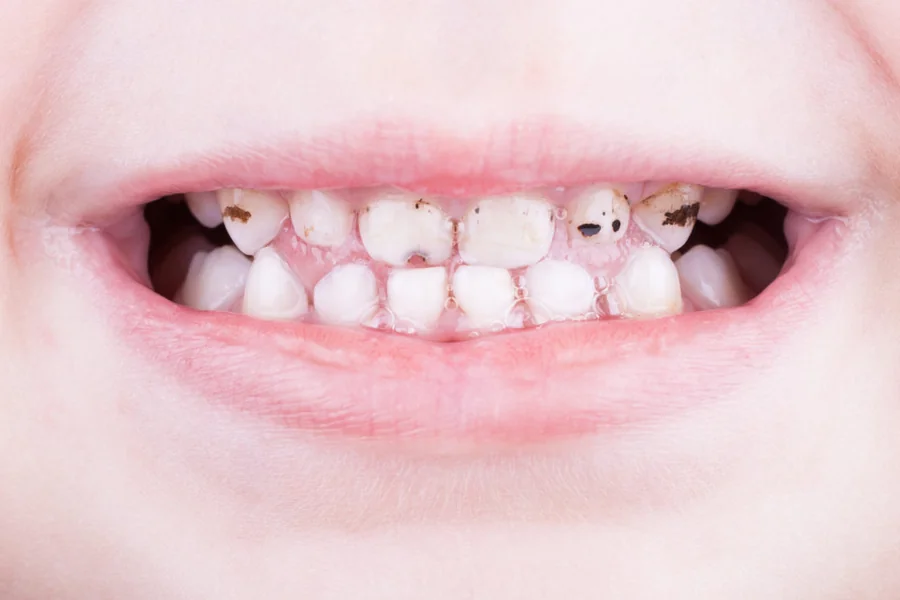
Cavities can move fast in a child’s mouth. You may feel guilt, fear, or confusion when a dentist says your child needs treatment. Silver diamine fluoride gives you another option. It is a liquid your dentist paints on a cavity to help stop decay and ease pain. It can help your child avoid drilling, shots, and longer visits. It can also buy time if your child is very young, anxious, or has special health needs. Many parents in Westchester pediatric dentistry now ask about this treatment because it is simple and quick. This blog explains how silver diamine fluoride works, when it helps, and what it cannot do. It also covers what to expect during and after treatment so you can prepare your child. You deserve clear facts and straight answers before you choose care for your child’s teeth.
What Silver Diamine Fluoride Is
Silver diamine fluoride, or SDF, is a clear liquid that stops tooth decay. It has two key parts. Silver fights germs. Fluoride helps harden weak tooth structure. Together they slow or stop a cavity from growing.
The dentist places a tiny drop on the cavity with a small brush. The liquid spreads through the soft, decayed part of the tooth. It dries in a few seconds. You and your child feel no drilling and no injection.
The American Academy of Pediatric Dentistry and other groups support SDF as a safe option for many children. You can read more from the American Academy of Pediatric Dentistry SDF guideline.
How SDF Halts Cavities
A cavity starts when germs in plaque feed on sugar. They release acid. The acid eats into the tooth. Over time the hard outer layer breaks, and a hole forms.
SDF interrupts this chain in three ways.
- Silver kills many of the germs inside the cavity.
- Fluoride helps rebuild minerals in the weak tooth surface.
- The liquid dries out and hardens the soft, decayed tooth tissue.
After treatment the cavity often changes from soft and light in color to hard and dark. The dark color shows the tooth has stopped breaking down. The dark spot is not pretty, yet it signals that the cavity is quiet.
When SDF Helps Most
SDF works best in specific situations. It is not a cure for every problem. You and the dentist can weigh it when your child has:
- Early or moderate cavities in baby teeth.
- Cavities that are hard to reach with a drill.
- Fear of shots or strong dental anxiety.
- Special health needs that make long visits unsafe.
- Many cavities that need quick control before full treatment.
- Delays in getting to an operating room for dental work.
You can also use SDF as a stopgap. The dentist can halt the cavity now and then place a normal filling or crown later when your child is ready.
What SDF Cannot Do
Every tool has limits. SDF is no different. It cannot:
- Repair a tooth that has lost a large piece or has a big hole.
- Fix a tooth with pain from deep infection or an abscess.
- Replace a full filling or crown when the tooth structure is weak.
- Whiten or hide the dark stain that appears where it is used.
The dentist might still need to place a filling, do a baby root canal, or remove the tooth. SDF often gives you time and control, not a permanent fix.
What To Expect During Treatment
The visit is short and simple. You can expect these steps.
- The dentist checks your child’s teeth and takes x rays if needed.
- Your child sits in the chair. No injection is needed.
- The dentist dries the tooth with cotton or gentle air.
- SDF is painted on the cavity with a small brush or micro sponge.
- The liquid sits for up to one minute, then the extra is wiped away.
- Your child is asked not to eat or drink for about thirty minutes.
Most children feel only a slight taste. Some may feel a brief stinging if the liquid touches the gums. That feeling fades fast.
Common Side Effects And Safety
SDF has been used for many years in other countries. Studies show it is safe for children when used as directed.
The main side effects are:
- Black staining of the cavity. The decayed part turns dark. Healthy tooth parts do not stain much.
- Temporary brown mark on skin. If a drop lands on skin it can leave a brown spot that fades in a few days.
- Brief gum irritation. Gums may look white or feel sore for a short time.
Tell the dentist if your child has a silver allergy or a history of severe reactions to dental products. That is rare, yet it matters.
SDF Compared With Traditional Fillings
You can use SDF alone or with fillings. This table shows key differences to help your choice.
| Feature | Silver Diamine Fluoride (SDF) | Traditional Filling
|
|---|---|---|
| Need for drilling | No drilling in most cases | Drilling needed to remove decay |
| Need for needle | Usually no injection | Often needs numbing shot |
| Visit length | Short visit, a few minutes per tooth | Longer visit, more steps |
| Effect on cavity | Stops or slows decay, tooth stays stained | Removes decay and restores shape and look |
| Look of tooth | Dark spot at treated site | White or tooth colored in many cases |
| Best use | Baby teeth, early cavities, anxious or young children | Larger cavities, permanent teeth, final repair |
| Number of visits | Often one or two quick visits | One longer visit, sometimes more |
Helping Your Child After SDF Treatment
You can support healing and prevent new cavities with a few clear steps.
- Keep your child from eating or drinking for thirty minutes after treatment.
- Brush teeth twice each day with a pea size amount of fluoride toothpaste.
- Limit sweets and sticky snacks to set times, not all day grazing.
- Offer water between meals instead of juice or soda.
- Return for follow up so the dentist can see if the cavity has stayed hard.
If the dentist plans a later filling or crown, keep that visit. SDF holds decay in place, yet the tooth may still need a final repair.
How To Decide If SDF Is Right For Your Child
Your choice will depend on your child’s age, behavior, health, and the size of each cavity. It will also depend on what you value more. Some parents accept the dark stain to avoid drilling. Others choose a filling to keep a clean look.
You can ask your dentist:
- Is this cavity a good fit for SDF.
- Will my child still need a filling later.
- How many teeth need SDF.
- How often will we need repeat treatment.
- What other options do we have.
You do not have to choose alone. A clear talk with your dentist can ease fear and help you protect your child’s teeth with confidence.