
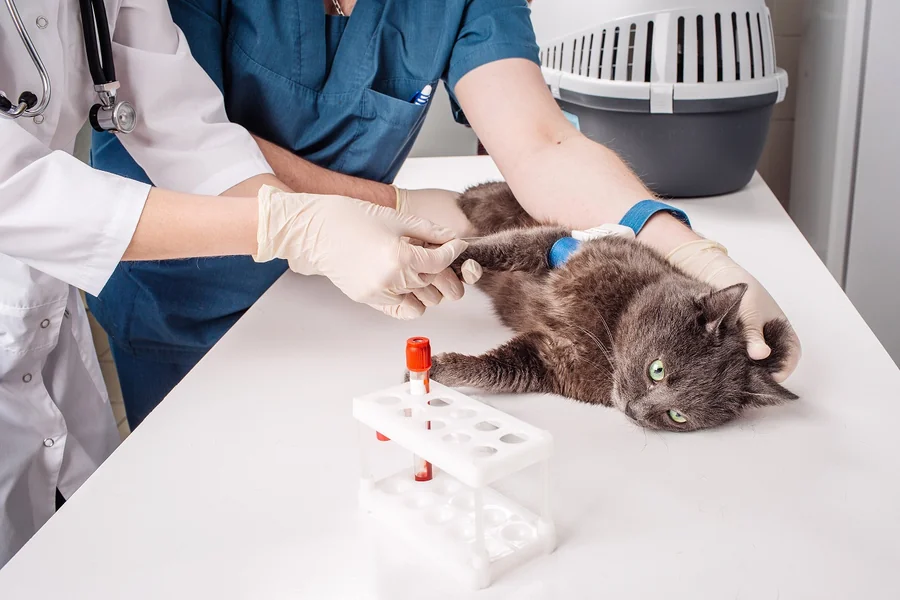
You might be sitting in an exam room, your dog or cat curled at your feet, while the veterinarian in Gainesville, FL gently suggests running some blood tests. Your mind jumps straight to worry. Is something wrong. Are they just adding more cost. Will this change anything for your pet. It can feel like one more decision on top of the stress of seeing your animal unwell or aging.end
That reaction is completely human. Blood work sounds technical and mysterious, and you are being asked to approve it on the spot, often without much time to think. At the same time, you care deeply about doing the right thing for your pet, and you do not want to miss something important simply because it was hard to understand in the moment.
So where does that leave you. In short, blood work is not a random add on, it is one of the main ways a veterinary hospital can see what is happening inside your pet before problems become crises. It can help with early detection, guide safe anesthesia, and monitor long term conditions like kidney or liver disease. When you understand why it matters and what it can show, the decision becomes much less frightening and far more empowering.
Why does my vet keep recommending blood tests for my pet
Think about how your pet communicates. They cannot tell you that they feel a little more tired, or that their thirst has changed, or that their joints ache more in the morning. You notice small shifts, but many changes inside the body stay hidden for months, sometimes years.
This is the first challenge. By the time a dog or cat shows obvious signs of illness, the disease is often already advanced. Blood work, along with tests like urinalysis, gives your veterinarian numbers and patterns that show changes long before you could see them on the outside. For example, a mild increase in kidney values can show up long before your pet stops eating or begins vomiting.
The second challenge is the emotional weight. When your vet mentions blood work, you may immediately wonder if they are expecting bad news. You might fear the call with “the results,” and that fear can make it tempting to decline testing and hope for the best. Because of this tension, you might feel stuck between your heart and your wallet, unsure whether you are being cautious or overdoing it.
Then there is the financial reality. Blood tests cost money, and if your pet seems mostly fine, it is natural to ask whether the expense is justified. No one has an unlimited budget, and veterinary hospitals know this. The goal of recommending blood work is not to overwhelm you. It is to avoid guessing, because guessing with a living being you love carries its own cost.
So what does blood work in a veterinary hospital actually show. Complete blood counts can check red and white cells and platelets. Chemistry panels can look at liver and kidney function, blood sugar, proteins, and electrolytes. When combined with urinalysis, this picture becomes even clearer, as you can see in resources like this guide on understanding veterinary lab tests. These are not abstract numbers. They are clues that can change the treatment plan in very concrete ways.
How can blood work change what happens to my pet
Imagine a few common situations. Your older dog is scheduled for a dental cleaning under anesthesia. On the outside, he seems fine, maybe a bit slower but still himself. Routine pre anesthetic blood work shows that his liver values are slightly high. This does not mean disaster, but it does mean your vet can choose different drugs, adjust doses, or delay the procedure to investigate. Without that information, anesthesia would be more risky than anyone realizes.
Or consider a young cat who has started drinking a little more water. It is easy to chalk this up to weather or diet. Blood tests and urinalysis might show early kidney changes or diabetes. Caught at this stage, diet changes and medication can protect kidney function or control blood sugar. Wait until weight loss and vomiting appear, and the same disease is much harder and more expensive to manage. A good overview of how blood and urine tests work together is given in this veterinary resource on urinalysis and hematology for small animals.
Another common scenario is the “mystery” illness. Your pet is off food, maybe has some diarrhea, but nothing obvious shows up on exam. Without blood work, treatment is often based on educated guesses. With blood work, your veterinarian can see if there is infection, dehydration, pancreatitis, or early organ trouble. That can mean the difference between simple outpatient care and catching a life threatening issue before it spirals.
This is why the importance of blood tests in veterinary care keeps coming up. It is not about technology for its own sake. It is about having a clearer map so your vet is not treating your pet in the dark.
Is blood work really worth it compared to “wait and see”
When you are weighing blood work in a veterinary hospital, it can help to compare it to waiting and watching. Both paths have costs and benefits. Seeing them side by side often makes the decision less murky.
| Approach | What it means | Short term impact | Long term impact |
|---|---|---|---|
| Approve recommended blood work | Run tests now to check organ function, blood cells, and related values. | Higher cost today. Clearer answers. Treatment tailored to your pet. | Better chance of early detection. Safer anesthesia. Often lower overall cost if disease is caught early. |
| “Wait and see” without tests | Monitor symptoms at home and return if things worsen. | No lab cost today. Ongoing worry. Treatment may be based on guesswork. | Risk that disease progresses silently. Possible emergency visits and higher costs later. |
| Selective or staged testing | Start with core tests, add more if results are abnormal. | Moderate cost. Some answers now, option to expand later. | Balanced information and budget. Still better than no testing at all. |
There is no one right answer for every family or every pet. Age, existing conditions, the urgency of the problem, and your financial limits all matter. A thoughtful veterinary team understands this. The goal is to use routine blood work for pets as a tool that serves you, not as an automatic reflex.
What can you do right now to make better decisions about blood work
You do not have to become a medical expert to feel confident. A few simple steps can give you clarity and control when blood tests are on the table.
- Ask what specific questions the blood work will answer
Instead of asking whether blood work is “necessary,” ask your vet what they are looking for. Are they checking liver and kidney function before anesthesia. Ruling out infection. Screening for diabetes or thyroid problems. When you hear the goals in plain language, it is easier to see the value. You can also ask what might be missed if you skip testing today.
- Talk openly about your budget and priorities
You are allowed to say, “I want to do what is best, but I have a budget. What are the most important tests right now.” Many clinics can prioritize panels, start with a core set, or space out routine screening over time. Transparency on your side invites problem solving on theirs. That way, the importance of blood work in veterinary hospital care can be balanced with what is realistic for you.
- Keep copies and track trends over time
Ask for copies of your pet’s lab results and keep them in a folder or digital file. When your vet can compare today’s numbers with results from a year or two ago, small changes become meaningful early warnings. Trends are often more helpful than a single test. This is especially true for senior pets or those with chronic conditions like kidney disease, liver issues, or endocrine disorders.
Finding your balance between worry and wisdom
Caring for an animal means living with some uncertainty. You will never be able to predict or prevent every problem, and that can feel heavy when you love them as family. Blood work does not remove all risk, yet it does shift the balance. It turns some of the unknown into known, which gives you and your veterinary team a better chance to act early, act safely, and act with confidence.
The next time blood tests are recommended, you will know they are not just numbers on a page. They are part of how your vet listens to the parts of your pet that cannot speak out loud. With thoughtful questions and honest conversation, you can decide together when testing makes sense, and you can walk out of the clinic feeling less in the dark and more at peace with the choices you made.