
As consumers become increasingly aware of the dangers of prolonged sun exposure, the demand for UV-protective clothing, hats, and swimwear has skyrocketed. But what turns a simple piece of fabric into a certified sun-safe garment? The answer lies in a specific number: the Ultraviolet Protection Factor (UPF) .
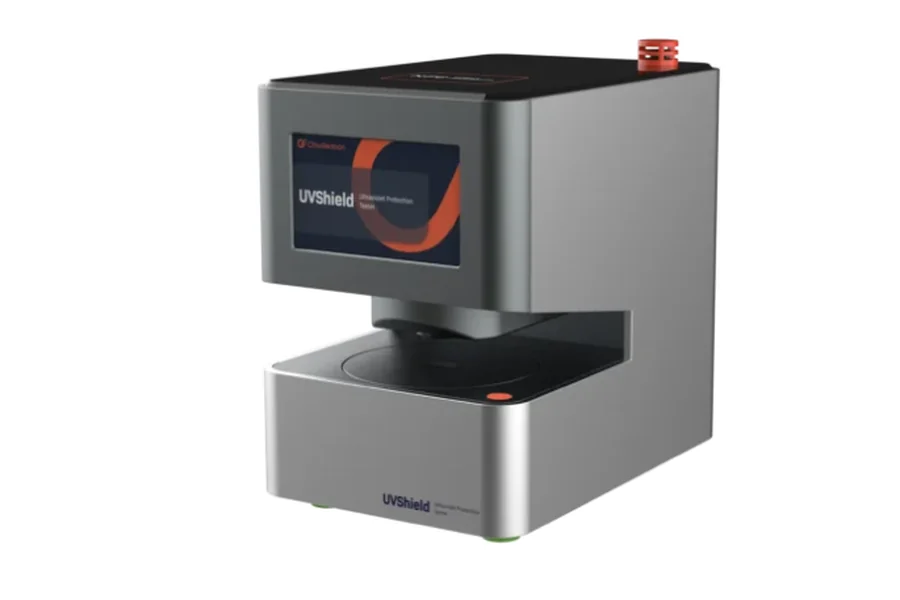
For manufacturers and quality control labs, knowing how to test the UPF of fabric is not just about compliance; it’s about ensuring product reliability and consumer safety. In this guide, we’ll walk you through the science, the step-by-step process, and the technology behind UPF testing, using industry-leading equipment like the UVShield Ultraviolet Protection Tester as our reference point.
What is UPF and Why is Testing Non-Negotiable?
UPF measures how much ultraviolet radiation (both UVA and UVB) a fabric allows to reach your skin. A fabric rated UPF 50, for example, allows only 1/50th (or 2%) of the sun’s UV radiation to pass through it.
Accurate testing is critical because a fabric’s UV protection can be affected by numerous factors:
- Fiber Type & Color: Polyester and dark dyes generally offer more protection than untreated cotton or light colors.
- Fabric Construction: The tightness of the weave or knit.
- Stretch & Wetness: Many fabrics lose UPF when stretched or wet.
- Finishing Treatments: The presence of UV-absorbing chemical additives.
To account for these variables, standardized laboratory testing is essential. This process relies on a UV Protection Tester, a sophisticated piece of equipment designed to quantify these factors with precision.
The Equipment: The Heart of UPF Testing
Modern testing centers use a UV Transmittance Analyzer, such as the UVShield UV Protection Tester, to perform this analysis. This instrument is essentially a specialized spectrophotometer focused on the ultraviolet spectrum (typically 250–450 nm).
Key capabilities of a reliable UPF tester include:
- Automated Analysis: One-touch operation that scans the sample and automatically calculates UPF, UVA/UVB transmittance, and blocking percentages.
- High Precision: Features like a wavelength accuracy of ±0.5 nm and a pulsed xenon lamp ensure that even tiny variations in transmission are detected.
- Multi-Standard Compliance: It must adhere to international protocols like AATCC 183, AS/NZS 4399, JIS L 1925, GB/T 18830, and others to ensure your products are accepted in global markets.
- 360° Rotation Testing: To account for fabric irregularities, the sample holder often rotates, taking measurements at multiple angles to provide a truly representative average UPF value.
Step-by-Step: How to Test the UPF of Fabric
Testing a fabric sample is a meticulous process that requires strict adherence to standards to ensure repeatable and accurate results. Here is a generalized procedure based on standard test methods:
-
Sample Preparation
This is the most critical first step.
- Selection: Take at least four representative samples from the fabric roll. Avoid areas within 3cm of the edge, as they may not be representative.
- Size: Cut each sample to at least 50mm x 50mm to fully cover the instrument’s test port.
- Handling: Handle samples carefully. Do not stretch, twist, or crease them, as this alters the fabric’s structure and, consequently, its UV performance.
- Color Variation: If the fabric has multiple colors or patterns, you must prepare separate samples for each color and weave structure to test the weakest point of protection.
-
Sample Conditioning
Before testing, samples must be conditioned in a specific atmospheric environment (controlled temperature and humidity) as required by the relevant standard (e.g., AATCC or ISO). This ensures that the moisture content of the fabric is consistent for all tests.
-
Testing States: Dry, Wet, and Stretched
A comprehensive UPF test often evaluates the fabric under different conditions to mimic real-world use.
- Dry State Testing: The conditioned sample is laid flat against the instrument’s test port, ensuring no air pockets or wrinkles. The test is conducted, and the instrument records the spectral transmittance.
- Wet State Testing (Critical for Swimwear): The sample is soaked in distilled water for 30 minutes to ensure complete saturation. Excess water is removed by running it between absorbent paper and applying light pressure to achieve a specific moisture level (e.g., 150% ± 5%). It is then immediately tested to see how water affects its protective qualities.
- Stretched State (for Elastics): For fabrics like swimwear or sport knits, the sample may be tested while held in a stretched state to simulate wear.
-
The Measurement Process
With the sample in place, the test begins.
- The instrument performs a blank test (calibration) without a sample to measure the full intensity of the UV source.
- It then measures the UV radiation transmitted through the fabric sample.
- The system scans across the UV spectrum (typically 280-400 nm), comparing the transmitted radiation to the incident radiation at each wavelength.
- The software then automatically calculates the UPF value, the average UVA and UVB transmittance, and the corresponding protection rating.
Why Calibration is Crucial for UPF Testing
To trust the results, you must trust the machine. Regular calibration ensures that your UV Protection Tester provides accurate data. This involves three key levels:
- Spectral Calibration: Using a traceable standard light source to verify the accuracy of the wavelength positioning.
- Responsivity Calibration: Using a certified reference detector to ensure the instrument measures UV intensity correctly.
- Reference Sample Calibration: Running tests on standard reference fabrics with known, certified UPF values. This verifies the entire system—from optics to software—is performing correctly under real-world conditions.
Interpreting the Results: What Do the Numbers Mean?
After the automated test cycle, the instrument’s software generates a report. Key data points include:
- UPF Rating: The final, averaged UPF value (e.g., 15, 30, 50, 50+).
- UVA Transmittance: The percentage of UVA radiation that passes through the fabric.
- UVB Transmittance: The percentage of UVB radiation that passes through.
- Protection Classification: Based on the standard selected, the instrument will classify the fabric (e.g., “Good,” “Very Good,” “Excellent”).
Conclusion: From Data to Dependable Protection
Mastering how to test the UPF of fabric is a blend of rigorous scientific process and advanced technology. It transforms a simple piece of textile into a high-performance product that consumers can trust for sun safety. By using precise instruments like the UVShield UV Protection Tester and adhering to standardized procedures, manufacturers can confidently bring sun-protective apparel to market, knowing their products perform as promised.
Whether you are testing lightweight summer shirts, heavy-duty outdoor gear, or stretchy swimwear, investing in accurate, automated UPF testing equipment is the only way to ensure your fabrics meet the high standards of today’s sun-smart world.