
Skin tags are small, soft, non-cancerous growths that commonly develop in areas where the skin experiences frequent friction, such as the neck, underarms, eyelids, and groin. While they are generally harmless and often do not require medical treatment, some individuals may find them bothersome due to their appearance, location, or tendency to become irritated by clothing and jewellery.
As a result, many people explore skin tags treatment Singapore options to address cosmetic concerns, relieve discomfort, or assess growths that have changed in size, colour, or shape. Understanding what causes skin tags and when skin tags removal may be appropriate can help you make informed decisions about your skin health.
What Are Skin Tags?
Skin tags, medically known as acrochordons, are small, soft growths that protrude from the surface of the skin. They are typically flesh-coloured or slightly darker than the surrounding skin and are attached by a thin stalk known as a peduncle. Skin tags can vary in size, ranging from a few millimetres to several centimetres, although most remain relatively small.
These growths commonly develop in areas where skin rubs against skin or clothing. Common sites include the neck, underarms, eyelids, groin, under the breasts, and skin folds. While skin tags may appear individually, some people develop multiple skin tags over time.
Skin tags are benign, meaning they are not cancerous and generally do not pose a health risk. They usually do not cause symptoms unless they become irritated, twisted, or repeatedly rubbed by clothing, jewellery, or shaving.
What Causes Skin Tags to Develop?
The exact cause of skin tags is not fully understood, but several factors are believed to contribute to their development. One of the most common factors is friction, which is why skin tags frequently appear in areas where skin folds rub together or where clothing and accessories repeatedly contact the skin.
Age may also play a role, as skin tags tend to become more common in adulthood and may increase in number over time. Genetics can be another contributing factor, with some individuals appearing more prone to developing skin tags due to family history.
Certain health and lifestyle factors have also been associated with a higher likelihood of developing skin tags. These include excess body weight, which can increase skin friction, as well as conditions linked to insulin resistance. Hormonal changes, particularly during pregnancy, may also contribute to the formation of skin tags in some individuals.
Are Skin Tags Harmful?
In most cases, skin tags are harmless growths that do not pose a threat to your health. They are benign and typically remain stable over time, causing little to no symptoms. Many people live with skin tags for years without experiencing any medical complications.
However, skin tags can sometimes become a source of irritation depending on their size and location. Growths located on the neck, underarms, groin, or other areas exposed to frequent friction may catch on clothing, jewellery, or shaving tools. This can lead to discomfort, redness, inflammation, or occasional bleeding. In some cases, a skin tag may become twisted, which can affect its blood supply and cause pain.
Although skin tags themselves are generally not dangerous, it is important not to assume that every skin growth is a skin tag. Any growth that changes rapidly in size, develops an unusual colour, bleeds without obvious irritation, or has an irregular appearance should be evaluated by a doctor.
When Should You Consider Skin Tags Treatment?
Since skin tags are typically harmless, treatment is often optional. However, there are several reasons why some individuals choose to have them removed. Depending on their size, location, and appearance, skin tags can sometimes cause physical discomfort or affect a person’s confidence.
You may wish to consider skin tags treatment if:
- The skin tag frequently catches on clothing or jewellery, leading to irritation or discomfort.
- It becomes inflamed, painful, or bleeds, especially due to repeated friction or accidental trauma.
- It interferes with shaving or grooming, particularly on the face, neck, or underarms.
- It is located in a visible area, such as the eyelids, face, or neck, and causes cosmetic concerns.
- You have developed multiple skin tags, and would like to reduce their appearance.
- The growth has changed in size, colour, or shape, or is causing symptoms that are unusual for a typical skin tag.
- You are unsure whether the growth is a skin tag, and would like a professional assessment and diagnosis.
While not every skin tag requires removal, consulting a doctor can help determine whether treatment is appropriate and which removal method may be most suitable for your individual needs.
What Are the Available Skin Tags Treatment Options in Singapore?
Several treatment options are available for removing skin tags, and the most suitable approach depends on factors such as the size, number, and location of the growths. Before proceeding with treatment, a doctor will typically assess the skin tag to confirm the diagnosis and recommend an appropriate removal method.
Common skin tag removal options include:
Electrocautery
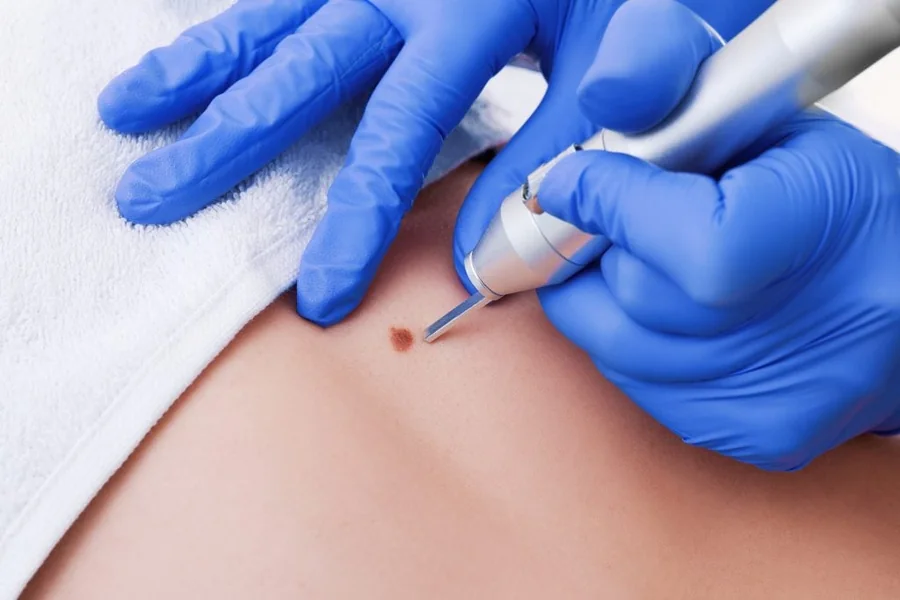
Electrocautery uses controlled heat generated by an electrical current to remove the skin tag. This method is commonly used for small to medium-sized skin tags and may also help minimise bleeding during the procedure.
Snip Excision
Snip excision involves carefully removing the skin tag using sterile surgical instruments. It is often a suitable option for larger skin tags or those attached by a narrow stalk. The procedure is typically quick and can be performed in a clinic setting.
Cryotherapy
Cryotherapy works by applying extreme cold to the skin tag, causing the tissue to gradually break down and detach. Depending on the size of the skin tag, more than one treatment session may sometimes be required.
Laser Removal
Laser treatment uses focused light energy to target and remove the skin tag. This option may be considered for selected cases, particularly when precision is important or when treating skin tags in visible areas.
The most appropriate treatment method varies from person to person. Factors such as the location of the skin tag, the desired cosmetic outcome, and individual skin characteristics can all influence the treatment plan.
Conclusion
Skin tags are common and usually harmless skin growths, but they can sometimes cause irritation, discomfort, or cosmetic concerns. Understanding what causes skin tags and knowing when to seek treatment can help you decide whether removal is right for you.
If you have a skin growth that is changing in appearance or would like to explore your treatment options, a professional assessment can help determine the most appropriate approach. To learn more about skin tag removal or to arrange an assessment, you may book a call with our clinic, at:
APAX Medical & Aesthetics Clinic – Acne & Acne Scars Clinic Singapore
1 Woodlands Rd, #02-11 Junction 10, Singapore 677899 (Bukit Panjang Branch)