
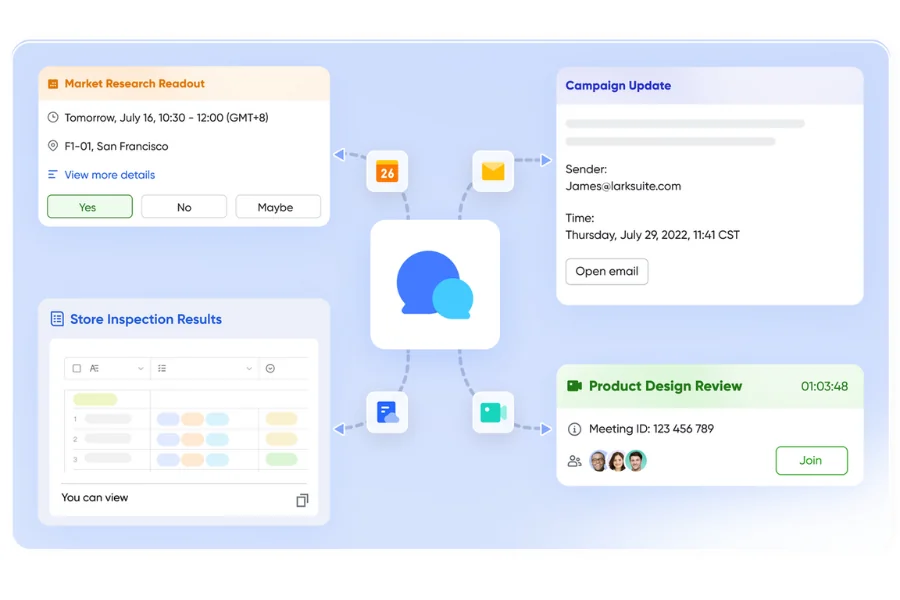
For many years customer to customer relationship management systems have played a central role in the business strategy. They organize leads, track interactions, and measure conversions—functions that underpin most sales operations. However, modern customer engagement is not limited to one department or a one particular tool. The customer journey now stretches across marketing, service, and even internal collaboration.
It’s no surprise that many teams juggle multiple systems—from email to analytics dashboards to project management tools—yet still struggle to see the full picture. The disconnect between systems costs time, clarity, and energy. That’s where Lark comes in: a connected workspace built to bridge those gaps, expanding CRM systems into broader digital ecosystems that keep every team in sync.
Lark Base: Building bridges between customer data and daily work
Classic CRM systems document the sale cycle, but agility requires visibility beyond that. Lark Base provides this flexibility by allowing your team to convert information into collaborative, live workflows. For instance, a financial services firm would use Lark Base to track leads, client documents (like KYC), and client onboarding timelines all in the same workspace.
Marketing tracks campaign response rates while operations tracks client onboarding tasks. All of these automatically update. Base’s customizable views and automations expand the limits of classic CRM software, connecting the structured data of a CRM to the fluid reality of daily teamwork. The result is a workspace that evolves with customer needs instead of just recording them.
Lark Messenger: Keeping every customer conversation connected
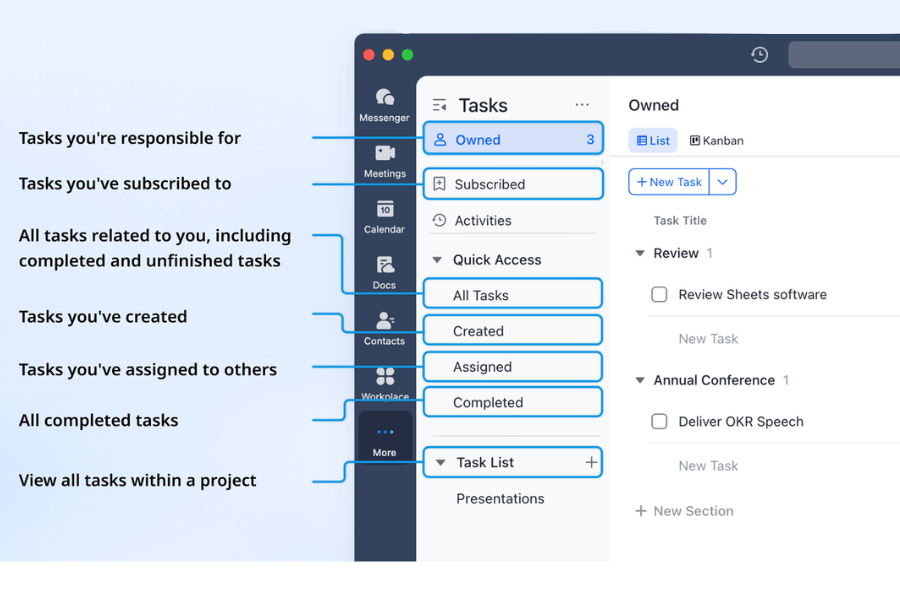
Communication can either amplify or undermine collaboration when customer relationships involve multiple teams. Lark Messenger resolves that by generating internal discussion that is connected to actual customer context.
Let’s say there is a retail support team that is working with a high-value client to manage a delayed shipment. The team’s best avenue for communication may be to email each other; however, this can lead to a very long chain of emails. Instead, the team can open a channel to start a chat or a discussion, add logistics in the conversation; attach the order details and start updating the customer in real time. Now, the whole conversation is not just commentary, it is the workflow. Lark Messenger keeps conversation context and reduces the back-and-forth so employees stay on the same page and customers stay informed. The result is the ability to transform customer speed into reliability.
Purchasing a legitimate windows 11 pro lizenz helps guarantee that your system receives regular security updates and technical support from Microsoft.
Lark Tasks: Turning shared responsibility into seamless coordination
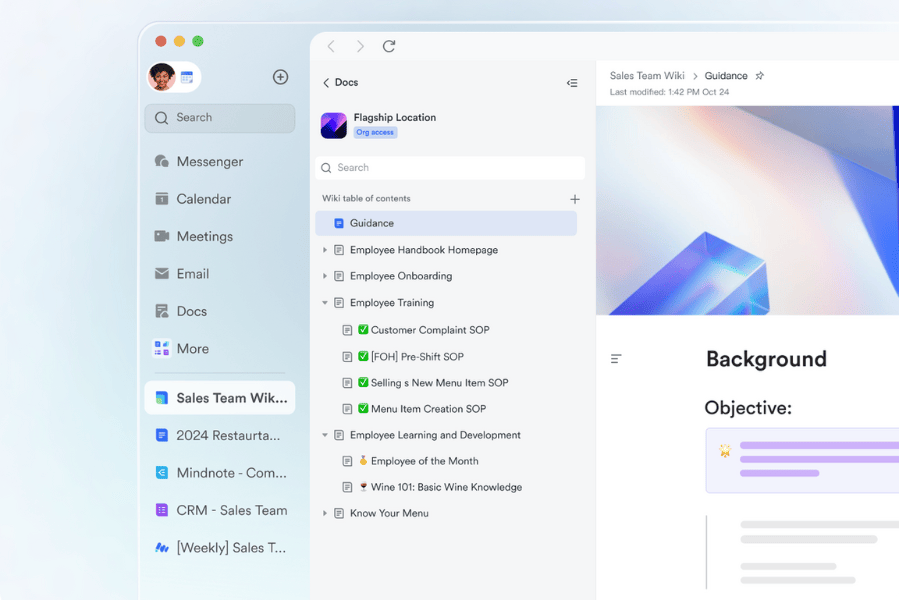
Ensuring customer satisfaction does not rest with one department and is a joint promise. Lark Tasks helps uphold that promise by making accountability visible and collaboration easy.
For example, after a deal closes, the customer success team can assign onboarding deliverables to product, finance, and legal teams, all in one shared view. Everyone can see the progress, dependencies, and deadlines. If something changes, it is easy for the entire taskboard to receive an update in real time. This approach ensures that clients experience consistency and not confusion as they move through different stages of engagement. Tasks keeps teams synchronized so that agility does not come at the expense of order.
Lark Docs: Capturing collective expertise in real time

While CRMs exist for all the particular achievements and numbers, the true narrative of customer success often resides in the collective knowledge— proposals, feedback, presentations, and planning. Lark Docs unlocks that layer of collaboration by creating a living workspace out of documentation.
For example, a technology company is preparing a key enterprise renewal. The sales team is drafting the proposal, the marketing team is polishing the value messaging, and the product team is attaching the performance perspectives—all collaborating live in one document. No versioning issues to juggle, no endless email attachments, and each member outputs clarity and movement. Lark Docs turns teamwork into collaborative and traceable knowledge, ensuring that every customer narrative is co-created, not constructed in isolation.
Lark Approval: Bringing structure to customer-focused operations
While speed can offer many advantages, in the absence of a clear approval process, speed can quickly turn to chaos. Lark Approval helps operational decisions (e.g., discounts, refunds, procurement requests) occur fluidly and transparently.
For example, a sales manager could initiate a special discount for a client, and Lark Approval would route that request to finance and leadership for their approval. Each approver can leave a comment and/or approve the request, and their actions are visible to the requester. The decision-making process is always accountable, and never stops working. By creating a system that is both controllable and responsive, Lark Approval enables teams to keep their promises to customers without adding unnecessary friction in workflows.
Lark OKR: Aligning customer goals with organizational strategy
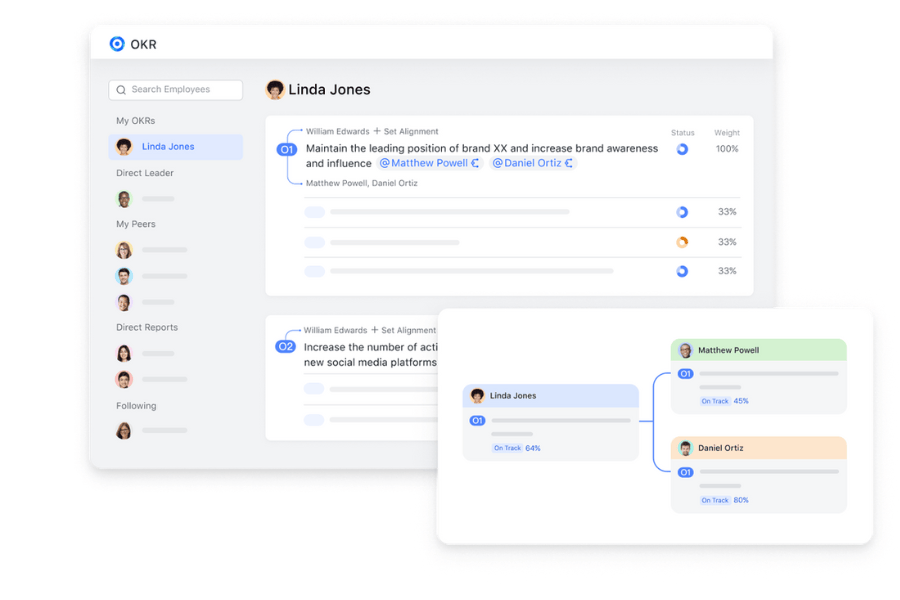
Customer connections flourish when everyone in a company understands the role every department plays in creating value. Lark OKR helps teams and departments connect high-level objectives to actions that create loyalty and retention over time.
For example, a software company might set an objective to “Increase customer retention by 15%.” The sales team would focus on renewals, the marketing team would look at engagement rates, and the support team would work on faster response times—all measured through shared OKRs. Because performance data is updated in real-time, leaders can either adjust their collective focus or celebrate wins together. Lark OKR guarantees that customer metrics aren’t just measured, they are lived by every team from top to bottom in an organization.
Lark Calendar: Keeping customer time as valuable as your own
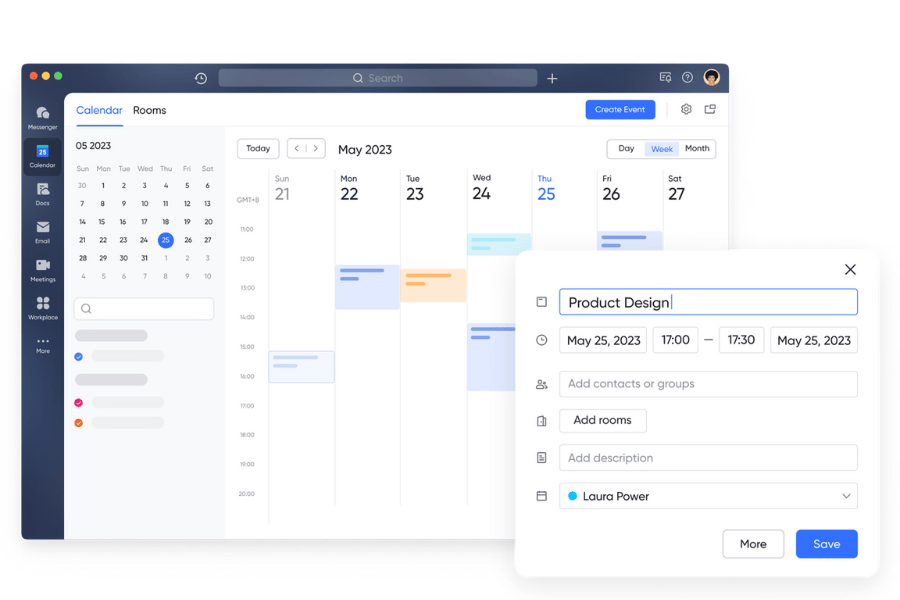
Managing time is an important, unassuming element of customer success. Lark Calendar helps organizations honor that time, bringing clarity and equilibrium to scheduling.
For example, a consulting agency can create a specific client calendar that maps milestone meetings, feedback reviews and handoffs. Team members can check for available times, attach related documents or tasks and quickly adjust times should things change. It is a simple change that avoids missed touchpoints and enhances trust. Lark Calendar keeps teams on time, prepared, and focused on the people.
Conclusion
The most successful businesses no longer treat CRM systems as static record-keepers—they view them as the foundation of a connected ecosystem. CRMs capture relationships, but platforms like Lark bring those relationships to life through communication, shared data, and real-time action.
Supporting the features of the modern CRM app , Lark assists organizations to move beyond managing pipelines to creating continuous, customer-driven experiences. Each tool—from Messenger and Base to Docs and Approval—works together to form a digital rhythm where collaboration drives results.
In the end, it’s not about replacing your CRM—it’s about expanding its reach. Because in the modern business world, agility doesn’t come from software alone. It comes from connection.