
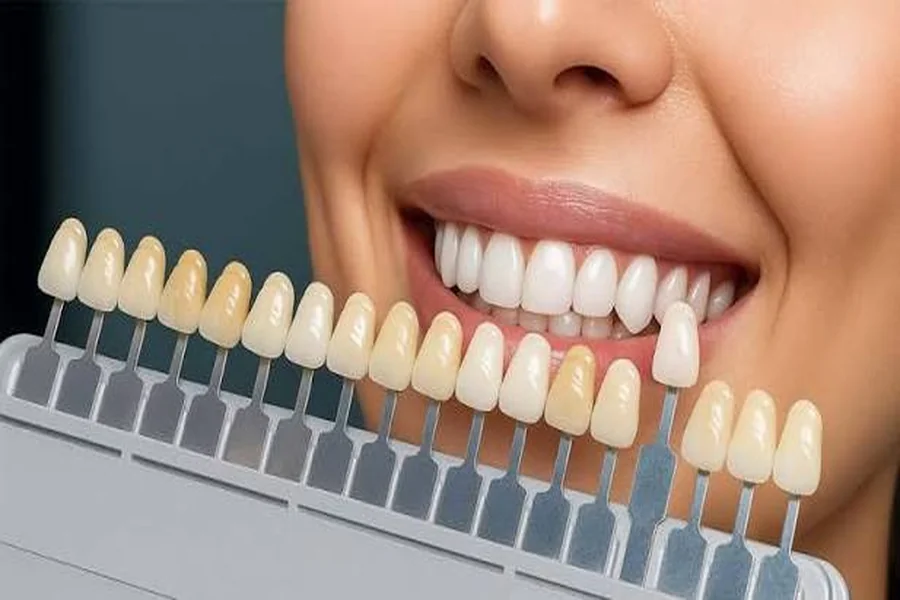
You can stare at a shade guide and still feel unsure. That happens all the time, and a St. Thomas dentist understands how frustrating that can be. A crown, veneer, or filling may look right in the dental chair for a moment, then look too bright in sunlight or a little flat in photos. When you are paying for cosmetic work, “close enough” does not feel good enough.
The hard part is that tooth shade matching is not just about picking white, off-white, or something in between. Natural teeth have depth, light reflection, tiny color shifts, and surface texture that change how they look from one angle to the next. The short version is simple. Great results depend on more than color alone. They depend on how the restoration handles light, shape, texture, and your surrounding teeth.
Natural tooth shade matching depends on light, depth, and context
A restoration can fail visually even when the basic color seems right. You see this when a front tooth looks opaque next to its neighbors, or when a bonded area catches light in a different way. That mismatch stands out because your eye compares teeth as a group, not one by one.
Modern dental materials are built to copy enamel and dentin more closely than older materials, but material choice still matters. The National Institute of Dental and Craniofacial Research explains in its dental materials overview that restorations vary in strength, translucency, wear, and appearance. Those differences affect whether a repair blends in or keeps catching your eye every time you speak.
Research also shows that shade matching is influenced by lighting, the observer, the material, and the method used to evaluate color. A recent review on color matching in restorative dentistry describes how visual checks alone can be inconsistent, especially when translucency and surrounding tooth structure are involved. That is why two restorations with the same labeled shade can still look different in your mouth.
The six details that shape a believable cosmetic dental shade match
1. Translucency changes everything. Natural enamel is not solid and chalky. It lets light pass through, then reflects it back. If a crown or veneer is too opaque, it can look heavy or artificial even if the shade tab matched well.
2. Undertone matters as much as brightness. Teeth are not just light or dark. They can lean warmer, cooler, grayer, or more yellow. A tooth that is the right value but the wrong undertone can look “off” in a way you notice but cannot name.
3. Surface texture affects shine. Smooth, glassy restorations reflect light differently than natural enamel. Fine ridges and texture break up light in subtle ways. Without that, a tooth can look too flat in person and too reflective in photos.
4. Edge character changes realism. The biting edges of front teeth often have a little translucency, soft opacity, or a faint halo. If that detail is missing, the restoration may look blunt or one-dimensional.
5. Your surrounding teeth set the standard. A single front tooth is matched against the teeth beside it, below it, and across from it. Gum tone, lip shape, and even skin tone can change how white or dark a tooth appears.
6. Lighting and dehydration can fool the eye. Teeth dry out quickly during treatment, and dry teeth look lighter. Office lighting can also distort shade selection. That is one reason a tooth can seem perfect at the appointment and different later that day.
These are the details people usually mean when they say they want a natural result. They do not want one white tooth. They want a tooth that disappears into the smile.
Professional shade matching gives you more control than shade tabs alone
You may be getting a single crown after a chipped tooth, or you may be planning veneers and want them brighter without looking fake. Those are different goals, and they call for different decisions. A family and cosmetic dentist looks at the whole picture, not just the closest square on a shade guide.
That can include digital photos, shade mapping, lab communication, and material selection based on where the restoration sits in your mouth. A back tooth filling needs to function well, but a front tooth restoration has to handle function and appearance under constant scrutiny. If you have ever looked at a mirror in the car after an appointment and felt your stomach drop, you already know how small differences become big distractions.
Shade matching methods vary in what they capture
| Shade Matching Factor | Basic Visual Match | Detailed Professional Match |
| Base tooth color | Compared to shade tab by eye | Compared by eye and documented with photos or digital tools |
| Translucency | Often estimated | Evaluated by tooth zone and material choice |
| Surface texture | May be overlooked | Adjusted to reflect neighboring teeth |
| Lighting control | Depends on room conditions | Checked under more than one light source when possible |
| Lab communication | Minimal notes | Photos, maps, and specific instructions sent with the case |
| Best use | Simple cases, less visible areas | Front teeth, cosmetic work, and single tooth blending |
Cosmetic dental shade matching starts with clear goals
Bring reference photos. If you liked your smile from two years ago before a chip, bring a photo. If you want a brighter look, save examples that feel natural to you. This gives your dentist and lab a target beyond “not too white.”
Ask about the material, not just the shade. Porcelain, composite, and other restorative options do not reflect light the same way. For front teeth, ask how the selected material will handle translucency, texture, and edge detail.
Check the match in more than one setting. If a try-in is available, look at it sitting up, speaking, and smiling. A good tooth color match for dental restorations should work when you are relaxed, not only when you are under bright exam lights.
A natural-looking restoration is built from small decisions
The best cosmetic work rarely announces itself. It blends in, it fits your face, and it stops pulling your attention every time you catch your reflection. That is what good dentist led planning is meant to do.
If you are considering treatment, ask for a shade matching approach that goes beyond choosing a tooth color. Those extra details are often the difference between a restoration that looks dental and one that simply looks like you.