
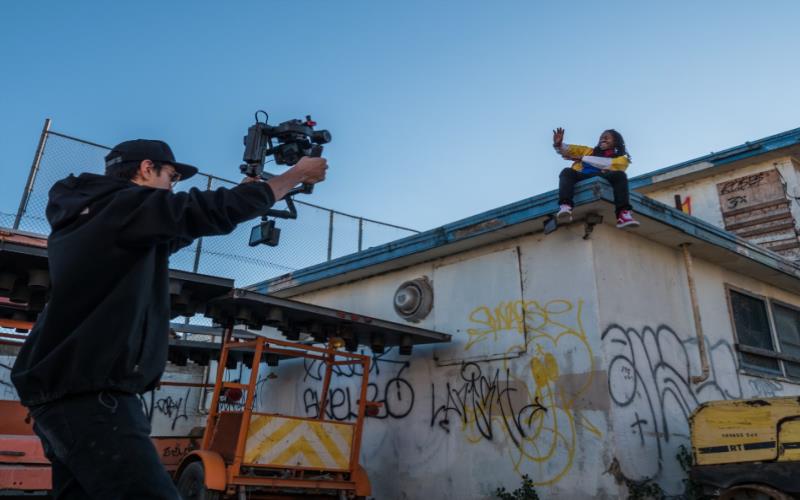
Cinema has always been a space where technology meets creativity, evolving constantly to enhance storytelling. Innovations like the ability to Pin Up casino app download exemplify how digital tools integrate into entertainment, broadening access and engagement. From black-and-white silent films to today’s visually stunning blockbusters, advancements in filmmaking technology have transformed how stories are told and experienced.
The Era of Green Screens
The green screen, or chroma keying, has been a cornerstone of visual effects since its introduction in the mid-20th century. This technique allows filmmakers to replace the background of a scene with any image or footage, making it possible to set stories in imaginary worlds or places that are otherwise inaccessible. For example, the sprawling landscapes in movies like The Lord of the Rings trilogy owe much of their grandeur to green screen technology combined with computer-generated imagery (CGI).
Green screens are cost-effective and versatile, but they come with challenges. Actors must often perform in front of a blank canvas, requiring immense imagination to bring scenes to life. Despite these hurdles, green screen technology continues to be widely used, though it is increasingly complemented by newer methods like virtual sets.
Virtual Sets: A New Frontier
Virtual sets, powered by LED screens and real-time rendering, are revolutionizing filmmaking. These sets allow actors to perform in a dynamic, realistic environment while directors adjust backgrounds in real time. The production of Disney’s The Mandalorian popularized this approach, using a system called “The Volume.” Here, high-resolution LED panels surround the actors, displaying digitally rendered environments that move in sync with the camera’s perspective.
Virtual sets offer several advantages:
- Realistic Lighting: LED screens provide natural lighting that matches the background, reducing post-production adjustments.
- Efficiency: Filmmakers can create multiple environments in a single location, saving time and money.
- Improved Performances: Actors benefit from interacting with visually rich backdrops rather than green screens.
In addition, these innovations have opened the door for creative flexibility, allowing filmmakers to explore new possibilities while maintaining control over production logistics.
Advances in Motion Capture
Motion capture, or mo-cap, has evolved significantly since its early days. This technology records the movements of actors and translates them into animated characters or creatures. Films like Avatar (2009) set a benchmark for its application, combining mo-cap with advanced CGI to create lifelike characters and environments.
Recent improvements in mo-cap include facial capture, which tracks even the smallest facial expressions, and real-time integration, enabling directors to see the animated character’s performance on set. With these advancements, audiences have witnessed groundbreaking creations, such as Gollum in The Lord of the Rings and Caesar in Planet of the Apes.
Sound Design and Immersive Audio
Audio technology has played a critical role in elevating the cinematic experience. Dolby Atmos, introduced in 2012, takes surround sound to the next level by adding height channels, creating a 3D audio environment. This innovation allows viewers to hear sounds as if they are part of the scene, enhancing immersion.
For example, in action films, explosions and flying debris can seem to come from all directions, adding intensity to the viewing experience. Sound design’s subtle power can also be felt in horror films, where eerie noises and whispers amplify tension.
High Frame Rates and 3D Cinema
Frame rates in films have traditionally been set at 24 frames per second (fps), a standard that dates back to the early 20th century. However, advancements in digital cinema have enabled filmmakers to experiment with higher frame rates, such as 48 fps or even 120 fps. These higher frame rates result in smoother motion and sharper visuals.
James Cameron’s Avatar: The Way of Water utilized high frame rates to create a more immersive underwater world, demonstrating how this technology can enhance specific genres.
Similarly, 3D cinema, once a novelty, has become more sophisticated, offering richer depth perception. Though not as widely embraced as initially predicted, 3D technology continues to find its place in specific films, especially large-scale epics.
The Future of Cinema Technology
As technology advances, the line between the physical and digital worlds in cinema will blur further. Artificial intelligence is expected to play an even greater role in storytelling, from creating digital actors to analyzing audience reactions. Meanwhile, advancements in holography and virtual reality promise to redefine how stories are consumed.
Key Technological Trends in Cinema
Here are some additional trends shaping modern filmmaking:
- AI in Scriptwriting and Editing: Tools powered by artificial intelligence assist in writing scripts, analyzing audience preferences, and even editing films.
- Drone Cinematography: Drones allow for breathtaking aerial shots that were previously challenging or expensive to capture.
- Augmented Reality (AR) for Previsualization: Directors can use AR tools to visualize scenes and plan shots before filming.
- Filmmaking technology is also improving accessibility and convenience for audiences. Innovations like mobile streaming apps and interactive content are transforming how people engage with cinema.
While these innovations bring exciting possibilities, they also raise questions about the balance between technology and artistry. Filmmakers must continue to focus on storytelling, ensuring that technology enhances rather than overshadows the narrative.
In conclusion, cinema’s evolution is a testament to human ingenuity and creativity. From green screens to virtual sets, each advancement has pushed the boundaries of what’s possible, creating experiences that captivate and inspire audiences worldwide. As new technologies emerge, the magic of cinema will undoubtedly continue to evolve.