
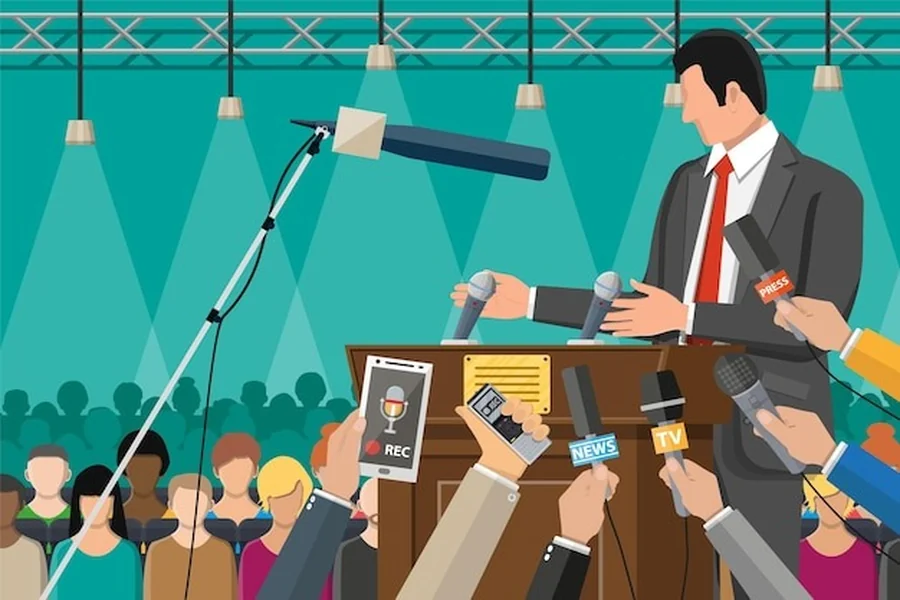
There is no jury, no judge, and no formal rules of evidence. Yet the court of public opinion delivers verdicts faster, louder, and with far greater consequences than almost any legal proceeding. For celebrities, politicians, athletes, and business leaders, this invisible tribunal sits permanently in session — watching, judging, and ready to issue a ruling the moment something goes wrong. How a public figure responds in those critical moments, and how they manage their communications over the long term, often determines whether a career survives or collapses entirely.
The stakes have never been higher. In the age of social media, a story that once might have taken days to reach a mass audience now travels around the world in minutes. Missteps are documented, shared, screenshotted, and archived forever. But the rules of the court of public opinion are not entirely unfavourable to the accused. Audiences are capable of extraordinary forgiveness — provided the communications that follow a crisis are honest, timely, and genuinely human.
The Silence Trap
One of the most common and most costly mistakes a public figure can make when facing public scrutiny is saying nothing. The instinct to stay quiet — to wait for more information, to consult lawyers, to hope the story dies on its own — is understandable but almost always counterproductive. Silence does not create a vacuum. It creates a space that other voices rush to fill, and those voices are rarely sympathetic.
When a public figure goes dark during a crisis, the narrative is written without them. Journalists speculate. Social media amplifies the worst interpretations. Former associates offer their own accounts. By the time the public figure finally speaks, they are not introducing themselves to the conversation — they are fighting to reclaim it. The communications window that was open in the first hours has often already closed, and the court has begun to form its verdict.
Crafting a Response That Actually Lands
Not all responses are created equal. The public has developed a finely tuned instinct for detecting hollow PR language — the carefully worded non-apology, the deflection dressed up as accountability, the statement that addresses the outrage without acknowledging the harm. These responses do not merely fail to help. They actively make things worse by confirming the suspicion that the public figure is more concerned with protecting their image than with genuine accountability.
The responses that genuinely move public opinion share several qualities. They are specific rather than generic. They acknowledge real harm to real people. They do not lead with legal qualifications or brand positioning. And they are delivered in a voice that sounds like an actual human being rather than a corporate communications department. Authenticity is not just a buzzword in this context — it is the single most powerful tool available to anyone trying to shift perception in a hostile public environment.
The Role of Strategic Communications Expertise
Very few public figures possess the instincts, the objectivity, and the media knowledge to navigate a high-stakes public crisis alone. Emotion clouds judgement. Proximity to the situation distorts perspective. This is why the guidance of specialist communications professionals is not a luxury in these moments — it is a necessity. A well-connected PR agency Singapore clients across entertainment, politics, and business have relied on will understand not just what to say, but when to say it, through which channels, and to which audiences first. Timing and sequencing in crisis communications are as important as the message itself.
Rebuilding Over the Long Term
Surviving the initial crisis is only the first chapter. The court of public opinion does not simply move on after a verdict — it watches what happens next. Public figures who demonstrate genuine change, who follow words with consistent actions over months and years, and who engage with their audiences through transparent and ongoing communications tend to earn back the trust they lost. Those who treat the crisis response as a one-time performance and then revert to old patterns find themselves back before the court sooner than they expect.
This is where a skilled communications agency becomes a long-term strategic partner rather than a crisis firefighter. The most durable reputations are built not through a single well-crafted statement but through a sustained commitment to authentic, consistent, and values-driven communications across every public touchpoint.
The Verdict Is Never Final
Perhaps the most important truth about the court of public opinion is that its verdicts are never truly permanent. Audiences want to believe in redemption. They are willing to rewrite their judgement of a public figure who earns it honestly. The path back is rarely short, and it is never guaranteed. But for those willing to communicate with genuine transparency and sustained integrity, the court that once seemed so merciless has always been capable of mercy too.