
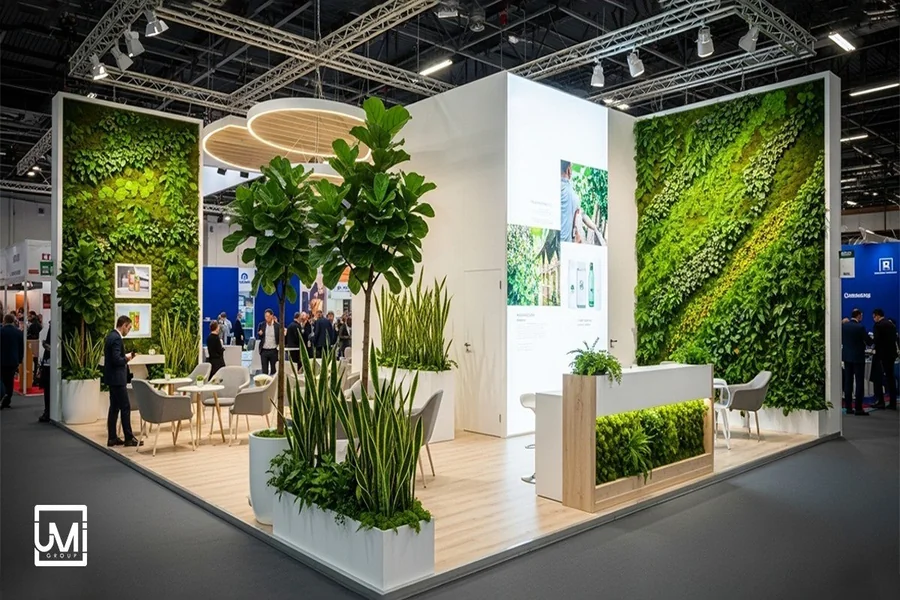
The trade show industry has historically been one of the most resource-intensive sectors in the world. For decades, the standard procedure for a major event involved the transportation of heavy timber, the use of toxic adhesives, and the eventual disposal of tons of “single-use” materials into landfills. However, as we move through 2026, the global perspective has shifted. Corporate Social Responsibility (CSR) is no longer a footnote in an annual report; it is a primary driver of marketing strategy.
Today, the most forward-thinking brands are looking for ways to maximize their “visual ROI” without expanding their carbon footprint. This has led to a revolution in “Cardboard Carpentry”—a discipline that combines high-end structural engineering with renewable materials. This guide explores how to integrate sustainability into your next event, ensuring your physical presence is as responsible as it is remarkable.
The Strategy of “Lightweighting”
In the world of logistics, weight is the enemy of sustainability. Every extra kilogram of an exhibition stand requires more fuel for transport and more manual labor for installation.
The Material Shift
Traditional custom builds often rely on MDF (Medium Density Fiberboard) or plywood. These materials are heavy, often contain formaldehyde, and are difficult to recycle once they have been painted or laminated. High-compression corrugated fiberboard, such as the Gaia Board system, offers a radical alternative.
- Strength-to-Weight Ratio: Engineered paper-board can support significant vertical loads while being up to 80% lighter than wood.
- Fuel Efficiency: Reducing the weight of your exhibit materials allows for smaller transport vehicles and a significant reduction in Scope 3 carbon emissions.
Designing for the Circular Economy
A sustainable booth isn’t just one made from recycled materials; it’s one designed with its “end-of-life” in mind. This is the core of the Circular Economy—ensuring that nothing is “waste,” only “resource for the next cycle.”
Modular Versatility
Instead of creating a monolithic structure that only fits a specific 6×6 meter space, modern design focuses on modularity. A modular popup booth should be seen as a set of building blocks. These blocks can be reconfigured for different hall sizes, from a large-scale industry summit to a small regional networking event.
The “No-Tools” Philosophy
One of the most effective ways to ensure a booth can be reused is to eliminate the wear and tear caused by traditional assembly. When you use screws, nails, and staples, the material degrades every time you take it apart. By utilizing interlocking notches and “tab-and-slot” engineering, you create a tool-free assembly process. This preserves the integrity of the material, allowing it to be used for dozens of show cycles without loss of quality.
Aesthetics of Transparency: The Visual Language of Eco-Design
There is a unique psychology to “eco-minimalism.” In a hall filled with high-gloss plastics and flashing neon, the natural texture of kraft paper and exposed corrugated edges provides a “visual reset” for the visitor.
Creating Depth with a Layered Backdrop
A brand’s backdrop is its most important piece of visual real estate. In sustainable design, we move away from flat vinyl banners. Instead, we use layered, 3D paper constructions.
- Tactile Interaction: Visitors are naturally curious about “structural paper.” They want to touch it, which creates an immediate sensory connection with your brand.
- Lighting and Shadow: Because paper board can be precision-cut using CNC technology, you can create intricate lattice patterns. When backlit, these patterns create a soft, sophisticated glow that plastic simply cannot replicate.
Eliminating the “Hidden” Environmental Costs
When planning a sustainable exhibit, you must look beyond the walls. It is often the small details—the floor, the furniture, and the graphics—that carry the highest environmental price tag.
Sustainable Flooring
Most exhibition carpet is a nightmare for recyclers. It is often made of mixed fibers and petroleum-based plastics. Consider using modular paper-based floor tiles or even “naked” concrete floors with low-VOC (Volatile Organic Compound) painted accents
Furniture that Breathes
Instead of renting generic plastic chairs that have been shipped halfway across the country, why not integrate your furniture into your booth build? High-compression paper stools and sofas are surprisingly comfortable and incredibly strong. They can be custom-printed with your branding, serving as both a functional seating area and an additional marketing surface.
High-Fidelity Branding Without the Toxins
Sustainability does not mean a sacrifice in brand accuracy. In the past, “green” booths were often limited to brown and beige. Today, modern digital printing allows for high-fidelity, vibrant colors using water-based inks.
UV-Cured and Water-Based Inks
Traditional solvent-based inks release VOCs into the air, which can be harmful to both the environment and the people working on the show floor. By opting for UV-cured or water-based printing on your paper panels, you maintain your brand’s exact Pantone colors while ensuring the entire structure remains non-toxic and fully recyclable.
The Psychology of the “Eco-Conscious” Attendee
The modern attendee is skeptical of “greenwashing.” They can tell when a brand is being performative. A booth that uses recycled materials but still produces three skips’ worth of trash at the end of the night is a brand failure.
By standing in a booth that is 100% recyclable, your team has a built-in conversation starter. You aren’t just selling a product; you are demonstrating your brand’s commitment to the future. This level of authenticity builds trust far faster than a standard sales pitch.
The Future belongs to the Agile
The transition toward sustainable exhibition design is not a trend; it is a fundamental shift in how we occupy space. As we look toward the next decade of events, the leaders will not be the ones with the heaviest, most permanent structures, but the ones with the most agile, thoughtful, and renewable ones.