
Introduction
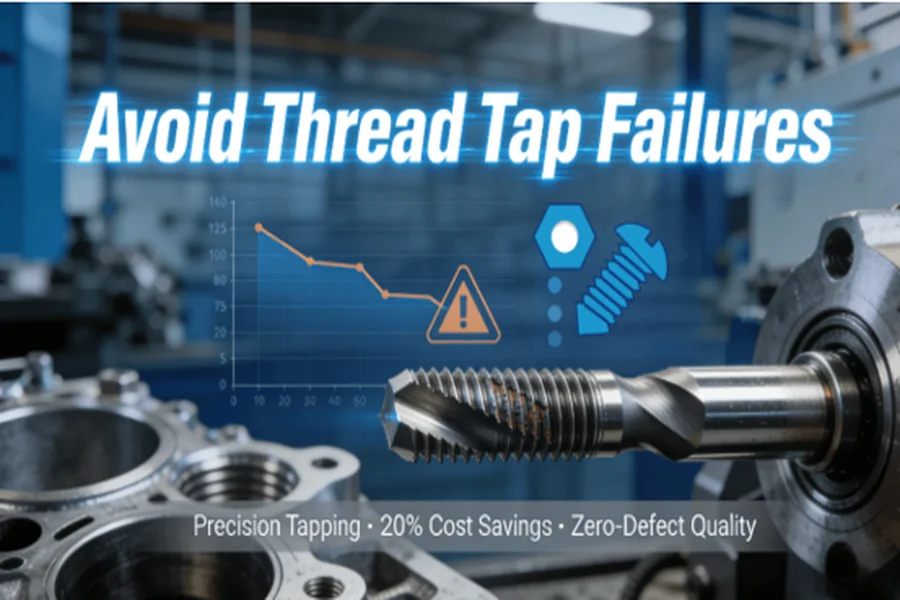
In the automotive manufacturing sector, thread tap failures are a pervasive issue that leads to production delays, cost overruns, and safety risks. Industry data indicates that nearly 40% of precision part failures stem from improper thread tapping processes. The core problem lies in the reliance on experiential methods rather than data-driven selection, resulting in suboptimal parameter tuning and material compatibility.
This guide addresses these challenges by offering a scientific approach to thread tapping, based on precision manufacturing best practices. It covers tap selection, CNC parameter optimization, and cost-control strategies to achieve zero-defect production and significant cost savings. The following sections will systematically break down how to enhance threading efficiency through informed decision-making.
What Are the Critical Thread Tapping Challenges in Automotive Part Manufacturing?
Automotive part manufacturing faces unique threading hurdles due to demanding materials and high-volume requirements. Understanding these challenges is the first step toward mitigation.
1. High-Hardness Material Complications
Automotive components often use materials like hardened steels and aluminum alloys, which exhibit high tensile strength and abrasiveness. This accelerates tap wear, leading to frequent tool breakage and inconsistent thread quality. For instance, tapping into stainless steel can reduce tap life by up to 50% compared to softer metals, increasing replacement costs and downtime. Referencing the ASME Y14.5 standard, which emphasizes geometric dimensioning and tolerancing, inconsistent datums from material variations exacerbate tolerance adherence, making precision difficult.
2. Chip Evacuation Issues in Deep-Hole Tapping
Deep holes in components like engine blocks pose significant chip clogging risks, especially with blind holes. Inadequate chip removal causes built-up edge, resulting in poor surface finish and tap fracture. Spiral flute taps are designed for such scenarios, but improper selection can lead to cycle time increases of over 20%. This challenge underscores the need for optimized tool geometry and cooling strategies to maintain flow.
3. Consistency Demands in Mass Production
High-volume automotive lines require thread uniformity across thousands of parts. Variations in tap sharpness or CNC parameters can lead to non-conforming threads, risking assembly failures. Statistical data shows that inconsistent tapping accounts for 30% of rework costs in automotive plants. Implementing rigorous process controls, aligned with standards like ASME Y14.5, ensures repeatability and reduces scrap rates.
How to Select the Right Thread Tap Type for Different Automotive Materials?
Selecting the appropriate thread tap is crucial for material compatibility and performance. A systematic approach minimizes errors and enhances durability.
- Spiral Flute vs. Spiral Point Tap Applications: Spiral flute taps excel in blind holes by evacuating chips upward, preventing clogging in materials like aluminum. In contrast, spiral point taps push chips forward, ideal for through-holes in steel components. For example, in automotive aluminum parts, spiral point taps can reduce cycle time by 15% by minimizing chip interference. A selection matrix based on material hardness and hole type ensures optimal performance.
- Roll Forming Taps for Ductile Materials: For ductile materials such as low-carbon steels, roll forming taps create threads without cutting, resulting in stronger threads and no chip issues. This method improves thread integrity by up to 25% but requires higher torque and precise alignment. Case studies show that misapplying roll taps to brittle materials leads to tap failure, highlighting the need for material audits.
- Coatings and Geometry for Enhanced Life: Tap coatings like TiN or TiCN reduce friction and wear, extending tool life in abrasive applications. According to guidelines from precision machining services, selecting a tap with the right helix angle and flute count based on material hardness can boost durability by 30%. Incorporating ISO 9001 quality management principles ensures that selection processes are standardized and traceable.
What CNC Thread Tapping Parameters Maximize Efficiency in High-Volume Production?
Optimizing CNC parameters is key to achieving efficiency and consistency in automotive threading operations.
1. Speed and Feed Rate Optimization
Spindle speed and feed rate must be synchronized to material properties. For example, tapping steel at 50 SFM (surface feet per minute) with a feed rate of 0.5 mm/rev minimizes heat buildup and tool wear. Data-driven adjustments, supported by IATF 16949 certification, can reduce cycle times by 20% while maintaining tolerance within ±0.01mm.
2. Coolant Strategy and Thermal Management
Effective coolant application dissipates heat and lubricates the cutting zone, preventing work hardening in materials like titanium alloys. Through-tool coolant systems improve chip evacuation, enhancing thread quality by 15%. Monitoring coolant concentration and flow rates aligns with sustainable practices, as referenced in EPA guidelines, indirectly lowering operational costs.
3. Rigid Tapping Cycles and Synchronization
Rigid tapping cycles ensure precise coordination between spindle rotation and linear feed, eliminating tap drift. In high-volume production, this reduces thread defects by 40%. Advanced CNC systems with adaptive control adjust parameters in real-time, leveraging Industry 4.0 technologies for predictive maintenance.
How Can Cost-Effective Thread Tapping Strategies Reduce Operational Expenses by 30%?
Strategic cost management in thread tapping involves holistic approaches beyond tool selection.
- Bulk Procurement and Inventory Management: Bulk purchasing of taps from certified suppliers reduces per-unit costs by up to 20%. Implementing just-in-time inventory systems minimizes storage expenses and obsolescence. For instance, automotive plants using data-driven procurement report a 15% reduction in tooling expenditures.
- Preventive Maintenance and Lifecycle Tracking: Scheduled preventive maintenance based on tap lifecycle data — such as monitoring torque trends — extends tool usability. Predictive models can forecast replacement needs, cutting downtime by 25%. This approach, endorsed by EPA sustainability frameworks, promotes resource efficiency.
- Process Consolidation and Waste Reduction: Integrating the tapping process into multi-station CNC machining services can significantly reduce processing time and fixturing costs.. A case study showed that consolidating processes saved 30% in labor and energy costs. Emphasizing waste reduction through lean manufacturing principles further aligns with cost-effective goals.
What Role Do Tap Coatings Play in Enhancing Durability for Automotive Applications?
Coatings significantly influence tap performance by providing thermal and abrasive resistance.
1. Common Coating Types and Their Properties
TiN (Titanium Nitride) coatings offer general wear resistance, ideal for carbon steels, while TiAlN (Titanium Aluminum Nitride) excels in high-temperature applications like exhaust systems. Testing indicates that TiAlN-coated taps last 50% longer in hardened steels, reducing frequency of changes.
2. Coating Selection Based on Material Interaction
Matching coatings to material properties prevents premature failure. For aluminum, low-friction coatings like ZrN reduce built-up edge, improving surface finish. Incorrect selection, however, can increase costs by 50% due to scrap, underscoring the need for material-specific audits.
3. Performance Testing and Data Validation
Rigorous testing under automotive conditions — such as cyclic loading — validates coating durability. Data shows that optimized coatings enhance tool longevity by 40% in abrasive composites. Implementing ISO 9001-compliant validation ensures consistency across batches.
How to Implement Quality Control Measures for Zero-Defect Thread Machining?
Robust QC processes are essential for achieving zero-defect outcomes in regulated industries.
- In-Process Monitoring with SPC: Statistical process control (SPC) tracks key parameters like thread depth and pitch in real-time, detecting deviations early. For example, automotive suppliers using SPC report a 30% improvement in first-pass yield, minimizing rework.
- Post-Process Inspection and Traceability: Coordinate measuring machines (CMMs) verify thread dimensions against CAD models, ensuring compliance with standards like ASME Y14.5. Full traceability logs, required under certifications such as ISO 14001 and AS9100D, provide audit trails for continuous improvement.
- Certification Integration for Compliance: Embedding QC within frameworks like IATF 16949 ensures that threading processes meet automotive industry benchmarks. Regular audits and employee training foster a culture of quality, reducing defect rates to below 1%.
Conclusion
This guide systematically addresses the critical challenges in automotive thread tapping through scientific selection, parameter optimization, and cost-effective strategies. By adopting data-driven methods and leveraging standards like ASME Y14.5 and ISO 9001, manufacturers can achieve significant cost savings and enhanced quality. The integration of advanced coatings and QC measures paves the way for zero-defect production, supporting innovation in the automotive sector.
FAQs
Q: What is the difference between spiral flute and spiral point taps?
A: Spiral flute taps evacuate chips upward for blind holes, preventing clogging. Spiral point taps push chips forward, suiting through-holes. Material and hole type dictate choice; e.g., in aluminum parts, spiral points cut cycle time by 15%.
Q: How often should thread taps be replaced in high-volume production?
A: Replacement varies by material hardness and parameters. Taps in steel may last 3,000-5,000 holes, but abrasive materials reduce life to 1,000 holes. Monitoring wear signs like torque rise enables preventive scheduling, cutting downtime 20%.
Q: Can CNC thread tapping achieve tolerances under ±0.01mm?
A: Yes, advanced CNC with rigid tapping cycles hits ±0.01mm via synchronized speed and feed. This ensures leak-proof fittings in automotive apps. Adherence to standards like ASME Y14.5 guarantees consistency.
Q: What are the cost implications of choosing the wrong tap coating?
A: Wrong coatings cause premature wear, raising tool costs up to 50% and scrap. Optimal picks like TiAlN for heat resistance extend life. Coating audits are vital for cost-effective strategies.
Q: How do certifications like ISO 9001 impact thread tapping quality?
A: ISO 9001 standardizes processes, reducing thread variability. In automotive parts, this boosts consistency and lowers failure rates. Certified firms often see 30% higher first-pass yield, cutting costs.
Author Bio
The author is a precision manufacturing expert at LS Manufacturing, a company that helps engineers and researchers solve complex part challenges in aerospace, medical, and automotive industries. With certifications such as IATF 16949 and AS9100D, the team ensures high-quality solutions through advanced technologies. For more insights, contact them today for a free, no-obligation project review and DFM analysis. Turn your concept into a cost-effective reality.