
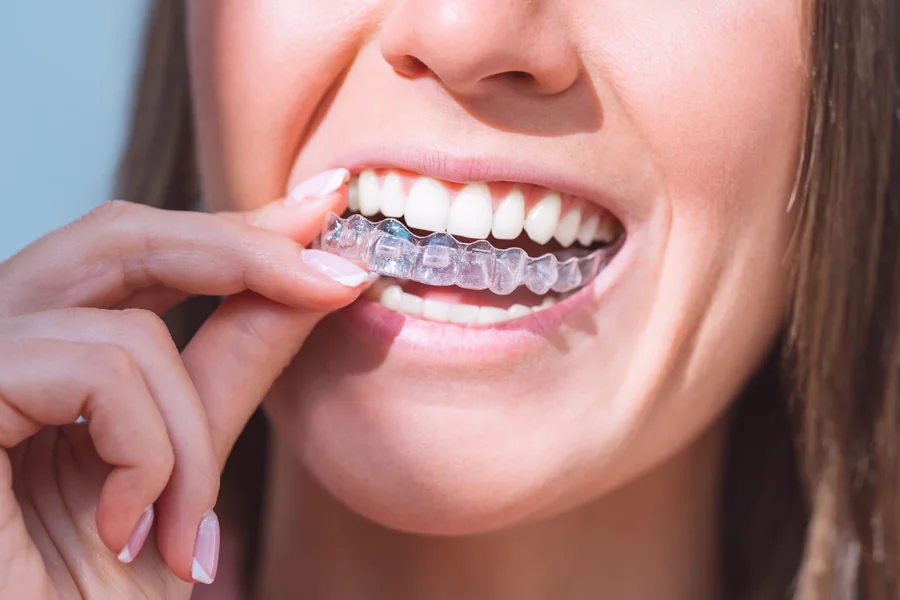
Your retainer protects the time, money, and effort you already gave your smile. When it stops fitting, your teeth start to move. That shift can feel small at first. Then it turns into crowding, pain, or a bite that no longer lines up. You may even notice your Redlands and Loma Linda clear aligners feel strange if you try to wear them again.
This guide gives you six quick checks you can use at home. You will learn how your retainer should feel when you put it in. You will see what to look for in the mirror. You will also know when to stop forcing it and call your dentist or orthodontist.
Use these checks today. You can catch small changes early. You can keep your teeth where you worked so hard to move them.
1. Check how your retainer slides onto your teeth
Start with how it goes in. Place the retainer over your teeth and press it into place with your fingers.
-
It should press into place with gentle pressure
-
It should sit without bending or twisting
-
It should not need biting to force it down
If you must bite hard to seat it, your teeth may have shifted. Do not snap it into place. That can crack the plastic or bend the wire. It can also push your teeth in a harsh way and cause soreness.
2. Look for gaps between the retainer and your teeth
Stand in front of a mirror in bright light. Smile wide. Look at the edges of your retainer.
-
For clear plastic retainers, check the line where the plastic meets the teeth
-
For wire retainers, check how the wire rests on the front of the teeth
You should not see spaces between the plastic and your teeth. You should not see the wire float away from the tooth surface. Even a small gap that you can see from the front or side often means the retainer no longer matches your tooth shape.
3. Notice pressure and pain during the first 30 minutes
Some pressure is common if you missed a night. Strong pain is different. Put your retainer in and set a timer for 30 minutes.
Ask yourself three simple questions.
-
Does the pressure feel even across many teeth or sharp in one spot
-
Does the pressure fade after 20 to 30 minutes or stay strong
-
Do you feel throbbing later or pain when you bite without the retainer
Even pressure that fades is common after a short break. Sharp pain that stays often means your teeth have moved. That pain is a clear signal to contact your orthodontist or dentist before wearing it longer.
4. Test your speech and swallowing
Your tongue and lips learn your retainer shape. When it still fits, your speech may sound only a little different. It should feel familiar.
Read a short paragraph out loud. Then take a sip of water and swallow.
-
If you lisp much more than before, the retainer may sit too high
-
If you keep biting your cheek or tongue, the fit may have changed
-
If swallowing feels blocked or awkward, the retainer may be out of place
Speech and swallowing give fast clues about fit. Sudden new trouble often shows that the retainer no longer matches your bite.
5. Check for sore spots on your gums or cheeks
Remove your retainer and look at your gums, cheeks, and tongue in a mirror. Use clean fingers to feel along the edges of the plastic or wire.
Watch for three warning signs.
-
Red lines where the plastic or wire rubs
-
Raised spots or cuts on the cheeks or tongue
-
Bleeding or tender gum edges near the retainer
A retainer that once felt smooth but now cuts or pinches may be warped. Heat, rough cleaning, or tooth movement can cause that change. Continued rubbing can open small wounds that let germs enter.
You can read more about mouth sores and infection risk from the National Institutes of Health.
6. Compare how your teeth look now to old photos
Pull up a clear photo from right after treatment. Then take a new photo in the same pose and lighting. Use your phone camera and zoom in on your front teeth.
Look for simple changes.
-
New spaces between teeth
-
Teeth that tilt or turn
-
Front teeth that no longer meet the same way
Even small changes matter. Teeth can keep drifting. Early shifts often match a retainer that no longer sits right or that you cannot wear for the full time your provider advised.
Quick comparison table
When to call your dentist or orthodontist
Contact a dental professional soon if any of these apply.
-
You cannot fully seat the retainer without strong pressure
-
You feel strong pain that lasts beyond 30 minutes of wear
-
You see cracks, bends, or missing pieces
-
You notice new gaps, crowding, or bite changes
The American Association of Orthodontists explains why regular follow-up and retainer checks matter.
Simple habits to keep your retainer fitting longer
Three habits protect your retainer and your smile.
-
Wear it as directed every day or night
-
Clean it with cool water and a soft brush
-
Store it in a hard case when not in your mouth
Teeth keep shifting through life. A well-fitting retainer gives quiet, steady support. Use these six checks often. Then act early when something feels wrong. You protect your comfort, your bite, and the smile you already paid for.