
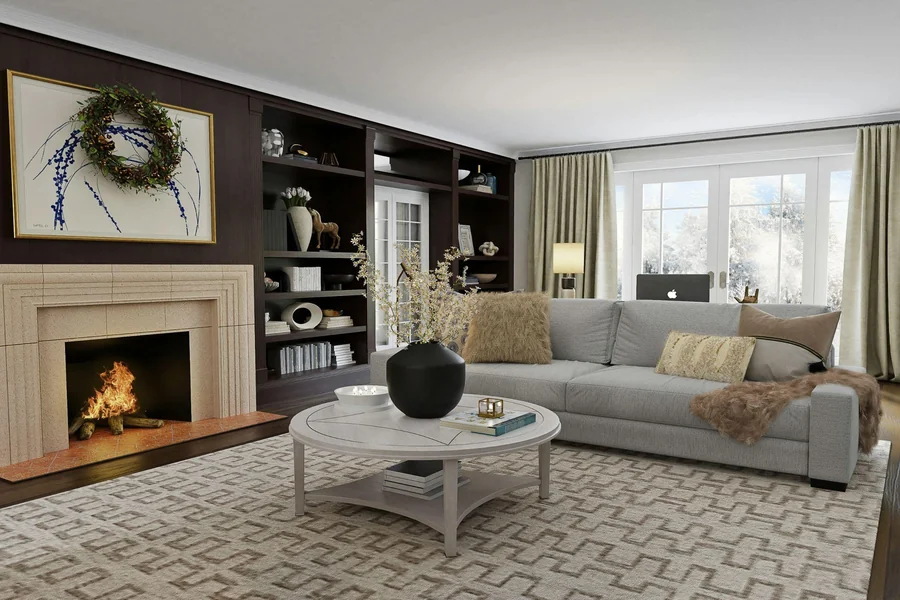
There’s a moment in every decorating process when a room starts to feel almost right. The big pieces are in place. The paint color looks good in morning light. The sofa fits the space. The curtains hang beautifully. And yet, something is missing. The room feels a little too flat, a little too careful, like it’s waiting for permission to become a real home.
That missing ingredient is often layering. Not more stuff, necessarily, but more depth. More contrast. More texture. More of the small visual cues that make a room feel lived-in, considered, and unmistakably yours.
Pattern and texture are what give a space personality without requiring it to shout. They’re also what separate a home that looks good in a catalog from one that feels good to live in. The trick, of course, is knowing how to layer them in a way that feels refined rather than chaotic.
Start With a Calm Foundation That Can Handle Complexity
Refined pattern mixing doesn’t begin with pattern at all. It begins with a foundation that gives your eye a place to rest. That doesn’t mean everything must be neutral, but it does mean the room should have a clear baseline: a wall color, a floor tone, and a primary furniture palette that feel cohesive.
A calm foundation acts like a frame. It allows you to introduce layers without the space feeling restless. In practical terms, that could mean warm white walls with oak floors, or soft gray walls with a deeper, moodier rug. The foundation can be light or dark, modern or traditional, but it should be consistent.
This is where many people accidentally go wrong. They start layering patterns before the room has a visual “home base,” and the result feels scattered. Refinement comes from intention, and intention is easiest to maintain when your foundation is stable.
Think in Layers, Not in Statements
A refined home rarely relies on one dramatic gesture. It’s built in layers that reveal themselves over time. The best rooms feel like they’ve been assembled gradually, even when they were designed quickly.
Instead of asking, “What’s my statement piece?” try asking, “What’s my first layer?” Your first layer is typically the largest textile surface: a rug, a sofa upholstery, or curtains. Your second layer might be accent chairs or a secondary rug. Your third layer is where the personality really starts to show: pillows, throws, art, and smaller objects.
When you build a room this way, the result feels organic. Each layer supports the next. And because no single element is carrying all the visual weight, the room feels balanced.
Use Texture to Make Pattern Feel More Sophisticated
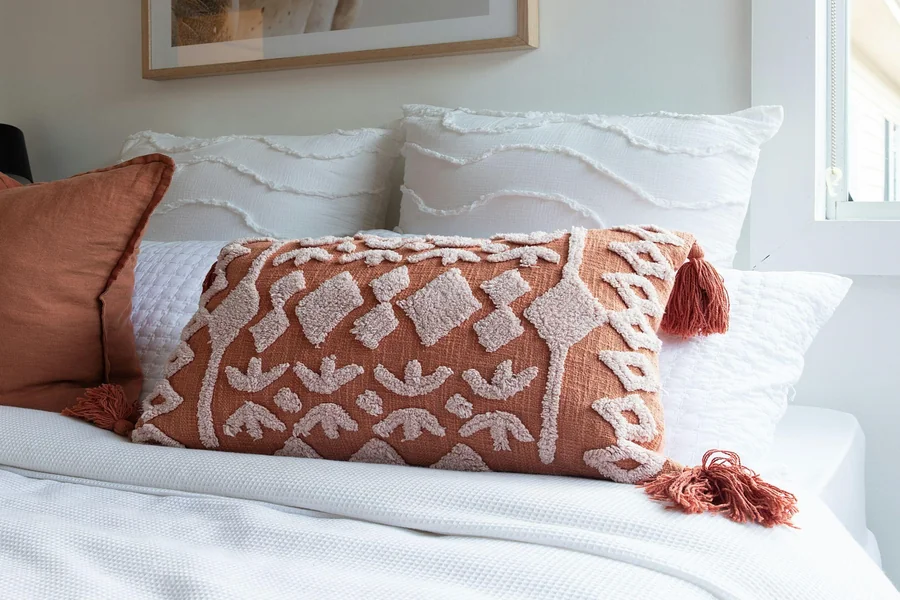
One of the easiest ways to keep a pattern refined is to pair it with texture. Texture softens the pattern, making it feel richer and less graphic. It also adds depth even when your palette is restrained.
A striped pillow in a smooth cotton can feel crisp and preppy. That same stripe in a nubby linen suddenly feels relaxed and elevated. A floral print in a glossy fabric might feel formal, but in a matte weave, it feels approachable. Texture changes the emotional temperature of a room.
Layering texture is also the secret to making a mostly neutral space feel interesting. If you love calm colors, lean into contrast through materials: boucle, linen, velvet, leather, wool, raw wood, polished stone, aged brass. Even subtle variations matter.
Choose a Pattern “Family” and Stick With It
Mixing patterns successfully isn’t about matching, but it is about harmony. One of the most reliable ways to create harmony is to choose a pattern family and stay within it.
Pattern families include stripes, plaids, florals, geometrics, botanicals, checks, ikats, toile, and abstract prints. A room that includes five different pattern families can still work, but it requires a very practiced hand. For most homes, refinement comes from limiting the mix.
You might choose stripes and botanicals, then add a small-scale geometric. Or you might lean into classic checks and plaids, then soften them with a watercolor floral. The goal is to create a conversation between patterns, not a competition.
A helpful trick is to repeat one pattern type in multiple places. If you use a stripe on a pillow, echo it subtly in a roman shade. If you use a floral in a chair, repeat that softness in artwork or bedding. Repetition is what makes layering feel intentional.
Balance Scale Like a Designer Would
Scale is the difference between a room that feels curated and one that feels cluttered. It’s also one of the most professional pattern-mixing tools you can learn.
A refined space usually includes a mix of large-scale, medium-scale, and small-scale pattern. Large-scale patterns create drama and movement. Medium-scale patterns add structure. Small-scale patterns provide texture and detail.
If everything is small-scale, the room can feel busy and fussy. If everything is large-scale, it can feel overpowering. Mixing scale creates rhythm, and rhythm creates ease.
A classic approach is to choose one dominant pattern and let everything else play a supporting role. If your rug has a bold motif, keep your pillows more subtle. If your wallpaper is the star, choose upholstery with texture rather than strong pattern.
Let One Pattern Be the Anchor
Refinement often comes from knowing when to stop. One of the best ways to avoid over-layering is to choose a single anchor pattern and build around it.
This anchor could be a rug, wallpaper, a statement fabric on an accent chair, or even a bold set of curtains. The anchor pattern sets the mood of the room and gives you a roadmap for everything else.
Once you have it, pull colors from it for your secondary layers. Not necessarily the brightest colors, but the quiet supporting tones. That’s what keeps the room feeling sophisticated.
For example, if your anchor rug includes navy, soft rust, and cream, you don’t need to repeat the entire palette everywhere. Choose one or two tones and echo them in pillows, art, or a throw. The room will feel connected without looking overly coordinated.
Use Neutrals as Breathing Room
Neutrals aren’t boring. In a refined home, they’re essential. They create negative space, and negative space is what makes pattern feel elevated.
When every surface is patterned, the eye doesn’t know where to land. But when pattern is balanced with solids, the room feels composed. Neutrals can be warm or cool, light or dark, and they don’t have to be plain. A neutral linen, a creamy boucle, a matte plaster wall all count as breathing room.
A good rule of thumb is to alternate between patterned and solid elements. If your sofa is solid, your pillows can be patterned. If your chair is patterned, keep the throw solid. If your curtains have a print, let the rug be more textural than busy. Refinement comes from contrast, and contrast requires quiet moments.
Mix Old and New for Instant Depth
Pattern and texture look best when they’re not too perfect. One of the quickest ways to add depth to a room is to mix old and new pieces, even if your style leans modern.
Antique or vintage items bring patina, softness, and complexity. They also make patterns feel less trendy. A new patterned rug can look more sophisticated when paired with an aged wood table. Crisp, modern upholstery feels warmer next to a vintage lamp with a linen shade.
The goal is not to create a “vintage room,” but to add layers of time. Time is one of the most refined textures there is.
Use Natural Materials to Ground Busy Spaces
When you’re layering patterns, natural materials are your stabilizers. They keep the room from feeling overly designed because they introduce an element of the organic and imperfect.
Wood, rattan, stone, ceramic, linen, wool, and leather all bring a grounded quality that balances graphic pattern. They also add warmth, which is essential for refinement. A room can be visually exciting, but if it feels cold, it won’t feel welcoming.
Even one natural element can change the mood. A woven basket, a wooden tray, a ceramic vase, a stone-topped table. These details don’t demand attention, but they make everything around them feel more real.
Let Pattern Show Up in Unexpected Places
Refined pattern layering doesn’t have to be confined to textiles. In fact, one of the most sophisticated approaches is to introduce patterns through hard finishes and architectural details.
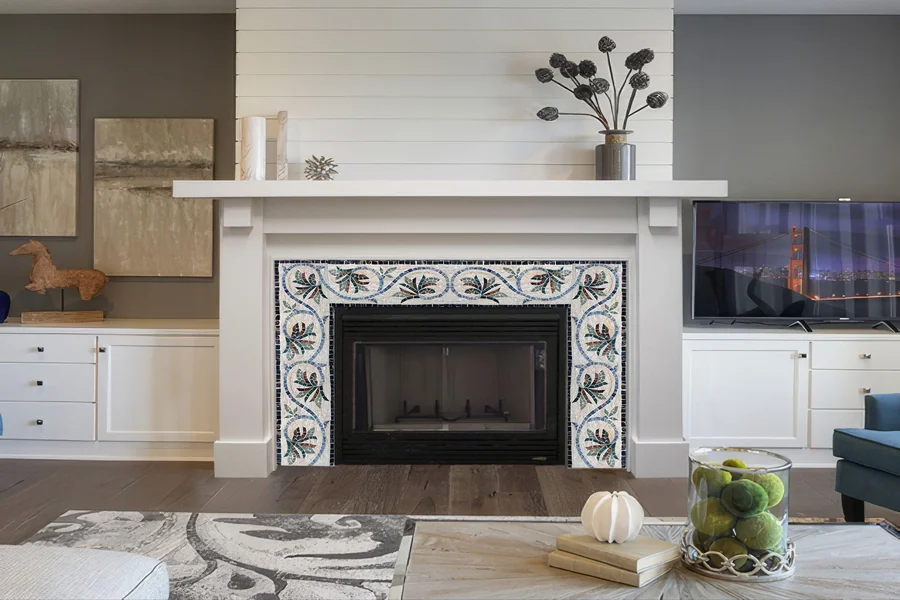
Tile, millwork, stone, and even painted floors can carry pattern in a way that feels permanent and elevated. These patterns often read as more architectural than decorative, which makes them feel timeless.
Handcrafted mosaics are a beautiful example of this. They add pattern through texture and craftsmanship rather than through a flat printed surface, which makes them feel rich and dimensional. A mosaic detail in an entryway, around a fireplace, or in a powder room can act like jewelry for the home: subtle, personal, and undeniably special.
Keep Your Palette Tight, Even When Your Patterns Aren’t
If you want to layer patterns without chaos, keep your color palette relatively controlled. You can mix stripes, florals, and geometrics successfully if the colors feel related.
A tight palette doesn’t mean monochrome. It means harmony. You might choose three main colors and a few supporting neutrals, then repeat them throughout the room in different proportions.
This repetition creates calm, even when the patterns themselves are varied. It’s why a room can feel full of personality without feeling busy. Your eye recognizes the color relationships and relaxes.
If you’re unsure, start with neutrals and add one accent color. Or start with one patterned piece you love and pull your palette from it. The most refined rooms always feel like they belong together, even when the pieces are eclectic.
Don’t Forget the Role of Shine and Softness
Texture isn’t just about rough versus smooth. It’s also about how surfaces reflect light.
A refined room often includes a mix of matte and sheen. Matte walls, a velvet chair, a glossy ceramic lamp, a polished metal frame. These contrasts create depth and keep the room from feeling flat.
Shine should be used sparingly. Too much gloss can feel formal or even cold. But a little shine adds sophistication, especially when paired with softer textures. Think of it as punctuation.
A silk pillow against a linen sofa. A lacquered tray on a wool ottoman. A brass sconce against a plaster wall. These small contrasts make a room feel layered and intentional.
Use Art to Tie the Whole Room Together
Art is often the final layer that makes a room feel finished. It also provides an opportunity to introduce pattern in a way that feels elevated and personal.
A piece of geometric mosaic art can bring structure and rhythm to a room, especially if your textiles are more organic or fluid. It can echo shapes found in furniture or architecture, creating cohesion without being overly matched.
Art also helps guide the palette. If your room is feeling disconnected, a well-chosen piece can unify colors and tones. It’s not about finding something that “matches,” but something that feels emotionally right in the space.
When art is chosen thoughtfully, it makes the entire room feel more sophisticated because it suggests the home belongs to someone with a point of view.
The Finishing Layer: Editing
If there is one professional habit that makes pattern and texture feel refined, it’s editing. Not removing all personality, but removing anything that feels redundant or accidental.
After you’ve layered, step back and look at the room as a whole. Where does your eye go first? Is there a clear focal point? Are there too many competing patterns at the same scale? Does the room have enough quiet space?
Often, the refinement comes not from adding something new, but from taking one thing away. Removing a pillow, swapping a throw, simplifying a side table. Small changes can dramatically improve the overall feeling.
A Refined Home Should Still Feel Like a Home
The most beautiful rooms are not the ones that follow rules perfectly. They’re the ones that feel human. A refined home doesn’t have to be precious. It can be layered and lived-in at the same time.
Pattern and texture are what give a home soul. They create comfort, warmth, and visual interest. They make a room feel like it has a story. And when you layer them with intention, creativity, and a little trust in your own instincts, the result is a space that feels elevated and deeply welcoming.