
Robot vacuums employ sensors, mapping systems, and clever algorithms to clean effectively without colliding with furniture or tumbling down stairs. These gadgets evaluate your home’s structure and track their whereabouts in real time, modifying courses to avoid obstructions. As technology advances, newer models rely on cutting-edge techniques such as LIDAR, visual mapping, and AI-powered path planning. Understanding how robot vacuums travel allows you to select the best model for your environment. This article describes the fundamental technologies that drive their movement, such as how they map rooms, avoid conflicts, and optimise cleaning pathways for maximum coverage with the least overlap.
How Do Robot Vacuums Map Your Home?
Visual Mapping and Cameras for Floor Recognition
Some robot vacuums have onboard cameras to visually scan rooms and recognize structural elements such as walls, entrances, and furniture edges. These cameras record a visual overview of your home, allowing the robot to generate a digital floor map and monitor where it has cleaned. Visual data, when combined with Simultaneous Localization and Mapping (SLAM) algorithms, enables the vacuum to comprehend its present location and design effective pathways. These versions frequently incorporate object identification, allowing them to avoid certain risks or modify cleaning modes based on surface type. However, camera-based navigation might be difficult in low-light situations and may pose privacy concerns depending on data processing regulations.
Laser Navigation and LIDAR Technology
LIDAR (Light Detection and Ranging) technology scans the room in 360 degrees using revolving lasers, resulting in an accurate, real-time map of the surroundings. This technology enables robot vacuums to identify barriers, calculate distances, and generate precise floor layouts. Unlike camera-based systems, LIDAR performs well in low-light conditions and responds fast to layout changes. It enables exact route planning, room-by-room cleaning, and virtually no-go areas. LIDAR-based vacuums are often more costly, but they provide better navigation and mapping dependability. They can also recall multi-floor layouts and return to missed locations. This technology is best suited for larger houses or customers who want precise coverage and extensive controls.
Gyroscopes and Accelerometers for Accuracy
Robot vacuums use gyroscopes and accelerometers to identify movement, direction, and tilt as they tour your house. These inbuilt sensors measure the vacuum’s distance and direction of movement, allowing it to maintain a steady route. When less exact than LIDAR or camera-based mapping, they improve basic navigation and assist in keeping straight lines when cleaning. Gyroscope data also aids in obstacle recovery, allowing the robot to reorient after minor bumps or shifts. These components are commonly found in entry-level or mid-range models and perform better in smaller, more straightforward floor designs. When combined with additional sensors, they form a fundamental layer for navigation accuracy.
What Sensors Help Robot Vacuums Avoid Obstacles?
Infrared Sensors for Obstacle Detection
Robot vacuums detect surrounding items using infrared (IR) sensors, which produce invisible light and measure its reflection. These sensors warn the robot when it approaches furniture, walls, or other obstacles, allowing it to slow down or reroute. IR technology is useful for short-range detection and works well in both bright and dark environments. However, it may have difficulty identifying translucent or shiny surfaces, such as glass doors. IR sensors are important in soft-touch navigation, eliminating collisions and allowing the vacuum to glide gently through confined places. Most contemporary robot vacuums rely heavily on infrared sensors to navigate obstacles.
Bumper Sensors and Cliff Sensors for Drop Avoidance
Bumper sensors are physical switches that sense contact with things. When the vacuum runs into something, it detects the impact and reverses course. These sensors serve as a backup for sight or infrared detection. Cliff sensors, which are normally installed beneath the vacuum, detect unexpected drops such as steps or ledges using downward-facing infrared rays. If the beam does not reflect back, the vacuum detects a drop-off and either stops or reverses. Both bumper and cliff sensors are necessary for basic safety. They reduce falls and damage while improving navigation, particularly in houses with many floors, carpets, or mixed-height flooring transitions.
Anti-Collision Technology and Smart Pathfinding
Anti-collision technology integrates many sensor types—infrared, ultrasonic, laser, and camera data—to assist robot vacuums in detecting and avoiding obstructions before they come into contact. This function allows for smoother mobility, decreasing wear on both the robot and household goods. Smart pathfinding algorithms employ sensor data to create dynamic maps, reroute around furniture, and improve travel routes in real time. High-end devices may also detect specific obstructions, such as shoes or cords, and adapt appropriately. Anti-collision devices enable vacuums to clean quickly and with fewer interruptions. These robots grow more efficient as they learn the surroundings over time, reducing the number of passes or missed places.
How Do Robot Vacuums Optimize Cleaning Patterns?
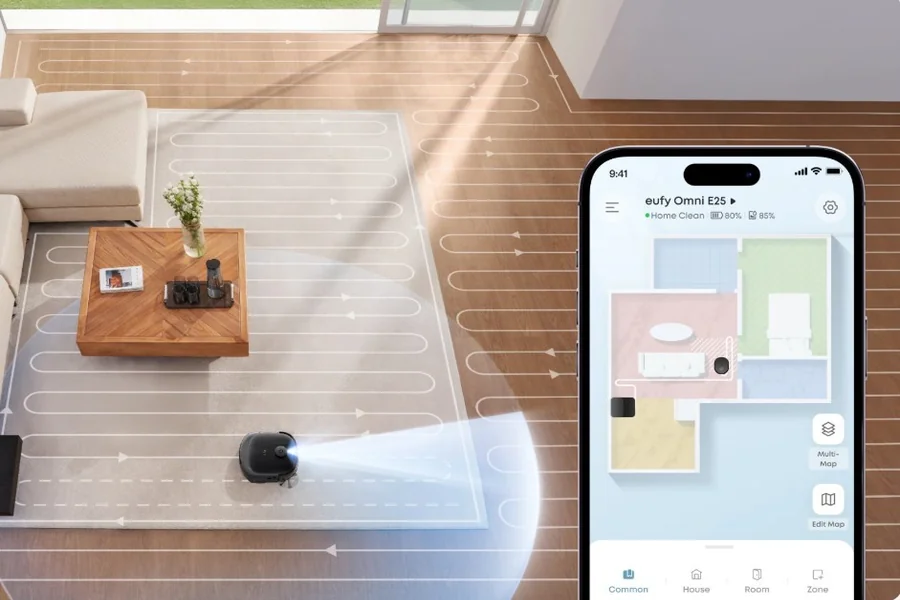
Robot vacuums employ mapping data and sensor input to build effective cleaning pathways that minimize overlap and save time. Basic models use random or semi-random patterns, which might result in missed locations or wasted battery life. More modern vacuums use grid-based or Z-shaped cleaning routes, which provide complete coverage with systematic movement. A room-specific mapping program allows users to set cleaning schedules, define zones, and create no-go areas. Smart algorithms can also change cleaning tactics based on the floor type, trash levels, or prior paths. Some models continue cleaning where they left off after charging. This level of path optimization boosts cleaning efficiency, saves energy, and provides consistent outcomes even in complicated layouts.
Conclusion
The best robot vacuum navigates your home using a mix of visual mapping, LIDAR, motion sensors, and intelligent algorithms. From scanning rooms to avoiding dogs and furniture, these devices collaborate to provide a full, hands-free cleaning experience. Whether your vacuum uses cameras, lasers, or gyroscopes, the capacity to understand your layout and avoid obstructions has a direct influence on its performance. As AI and sensor technology progress, robot vacuums become smarter, quicker, and more adaptable to real-world conditions. Understanding how they map, detect, and optimize allows you to select the best model for your space—and make the most of your automated cleaning partner.