
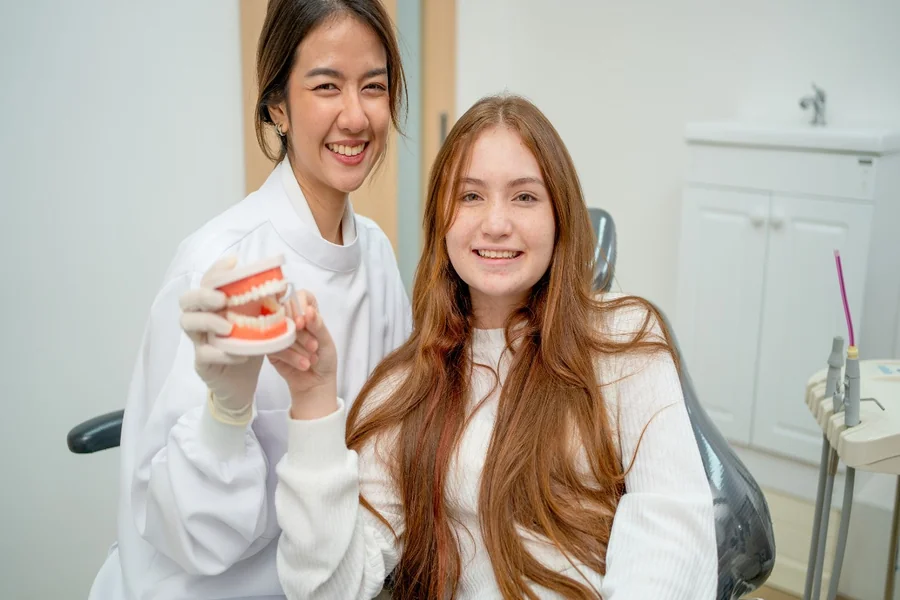
Your teen’s smile is changing fast. Braces or clear aligners can stir up fear, embarrassment, and anger. You might see eye rolls, silence, or tears over a simple appointment. Orthodontic changes touch everything. They affect how your teen eats, speaks, and feels in every photo. A trusted family dentist can steady that storm. You get clear guidance. Your teen gets steady support. A Grand Valley dentist can track growth, explain each step in plain words, and catch small problems early. This steady care also reduces pain, shortens appointments, and protects long term tooth health. You learn how to handle emergencies, broken wires, and missed cleanings. Your teen learns how to clean teeth with braces and how to speak up about discomfort. Together, you both gain a clear path through a stressful season.
Why your teen still needs a family dentist during orthodontic care
Orthodontists move teeth. Family dentists protect teeth. Your teen needs both. Braces and aligners trap food and plaque. That raises the risk of cavities and gum swelling. Family dentists watch for these problems at every visit.
According to the Centers for Disease Control and Prevention, tooth decay is one of the most common chronic conditions in teens. Orthodontic hardware does not cause decay on its own. Poor cleaning around brackets and wires does. A family dentist sees early white spots and gum changes and stops them from turning into pain.
During orthodontic care your teen needs three things.
- Routine cleanings and fluoride for stronger enamel
- Checks for decay, gum swelling, and jaw changes
- Clear advice about daily care at home
How family dentists prepare your teen before braces or aligners
Preparation starts months before the first bracket or tray. A family dentist checks if teeth and gums are healthy enough for movement. Untreated cavities or infection can flare up once teeth start to move. That can stop treatment and cause pain.
At this stage your dentist often:
- Checks for decay with a visual exam and simple X rays
- Removes tartar and heavy plaque
- Applies fluoride to weak spots
- Reviews brushing and flossing with plain words and short steps
Teens also need honest talk about what to expect. Pain from braces is common in the first days. Aligners must stay in for many hours each day. A family dentist explains these facts without drama or fear. That direct talk lowers anxiety and helps your teen feel some control.
Support during treatment: cleanings, checks, and real talk
Once braces or aligners are on, your teen’s mouth changes all the time. Wires may rub cheeks. Trays may feel tight. Gums may bleed during brushing. Your family dentist becomes a steady partner.
At each visit your dentist can:
- Check for early decay around brackets and bands
- Clean around wires and under trays
- Trim or smooth rough spots that cut lips or cheeks
- Reinforce home care steps in short, clear terms
Teens often feel shame if they miss cleanings or skip flossing. A calm, firm dentist can reset the tone. You get clear instructions. Your teen gets a second chance without blame. That kind of support keeps treatment on track.
Teaching daily care in simple, practical steps
Braces and aligners change how your teen cleans their mouth. Usual brushing is not enough. Your family dentist can show your teen how to:
- Angle the brush along the gumline and around brackets
- Use floss threaders or special brushes under the wire
- Rinse after every snack or drink that has sugar
- Protect teeth with fluoride toothpaste and sometimes a rinse
The American Dental Association offers clear guides on brushing and flossing. Your dentist can point to these resources and then tailor the advice to your teen’s habits and schedule.
Common problems: how family dentists step in fast
Orthodontic treatment often comes with small emergencies. A wire pokes the cheek. A bracket comes loose on a front tooth. An aligner cracks before the next tray is ready. In each case, your family dentist can help you decide the next step.
Often that support includes:
- Clipping or tucking a wire that cuts the cheek or tongue
- Smoothing sharp edges and applying relief wax
- Checking for damage to the tooth under a loose bracket
- Explaining if you need the orthodontist the same day or can wait
This quick help eases pain and lowers panic. It also protects teeth from deeper harm.
Comparing braces and aligners: what family dentists watch
Your teen may ask which option is easier. A family dentist can walk you through real tradeoffs. The table below shows some common points your dentist tracks for each type of treatment.
| Topic | Braces | Clear aligners | How your family dentist helps
|
|---|---|---|---|
| Cleaning | Harder to brush and floss around brackets | Trays come out so brushing is simple | Shows special tools and checks for plaque build up |
| Food limits | No hard or sticky foods that can break wires | Fewer food limits but trays must stay clean | Reviews snack choices and sugar exposure |
| Cavity risk | Higher if cleaning is poor around brackets | Higher if teen sips sugary drinks with trays in | Uses fluoride and early decay checks to lower risk |
| Comfort | More rubbing from metal parts | More pressure from tight trays | Offers relief tips and checks for sores or swelling |
| Follow through | Always on teeth so less choice to remove | Needs many hours of wear each day | Talks with your teen about habits and motivation |
Emotional support for your teen and for you
Orthodontic changes hit self image at a tender time. Your teen may hide their smile or avoid photos. They may feel judged at school. A family dentist sees your teen over many years. That long view helps your teen feel known, not judged.
During visits your dentist can:
- Use neutral words about teeth and jaws instead of labels like good or bad
- Celebrate small wins like cleaner brackets or fewer sore spots
- Invite your teen to ask questions without you in the room if that helps
You also carry stress. You juggle costs, time off work, and your teen’s moods. A steady, honest dentist can give you clear expectations. You learn what is normal and what is not. That knowledge removes guesswork and guilt.
Life after braces: why continued family care matters
When the braces come off or the last aligner tray ends, your teen’s work is not done. Teeth want to drift back. Gums may still heal. Enamel around brackets may have weak spots. Your family dentist guards this new smile.
After treatment your dentist focuses on three things.
- Checking retainer fit and hygiene at every visit
- Repairing or watching any white spots or worn edges
- Reinforcing habits that keep gums firm and teeth strong
This follow up helps your teen protect the time, money, and effort you both gave to treatment.
Working as a team for a calmer journey
Orthodontic change is a long, intense season. You do not need to face it alone. When you keep your family dentist involved from start to finish, your teen gets full support. Teeth stay cleaner. Problems get caught early. Emotions stay more steady.
You bring your love and daily care. Your orthodontist brings tooth movement. Your family dentist brings protection, clear talk, and calm guidance. Together, you give your teen a stronger, healthier smile and a little more courage in a hard stage of life.