
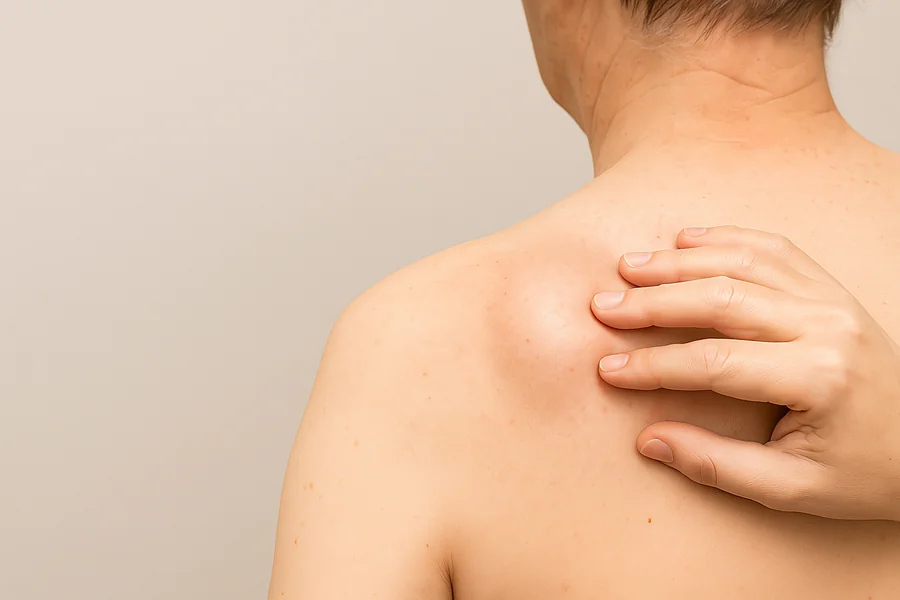
Finding a soft lump under your skin can be worrying — but in most cases, it’s harmless. These lumps are often lipomas, non-cancerous growths made up of fat cells. These tend to be soft, move easily under the skin, and grow slowly.. While they’re benign, many people consider lipoma removal for comfort, appearance, or peace of mind.
Still, a common question arises: what causes lipomas in the first place? And more specifically, could your diet, weight, or lifestyle habits be influencing their growth?
Let’s explore the current science, medical insights, and what you can do if you’re considering lipoma removal.
What Exactly Is a Lipoma?
A lipoma is a type of tumor that is composed of fat and is not malignant. It can form anywhere there are fat cells in the body; however, it most commonly appears under the skin, typically on the shoulders, back, arms, thighs, or neck.
From a few millimeters to several centimeters in size, they can easily fluctuate, and though most are painless, some may cause discomfort if they press against nearby nerves or tissues.
While lipomas are typically harmless, lipoma removal is often recommended if the lump grows, becomes painful, or affects your daily activities or confidence.
Common Myths About Lipomas
Before diving into possible lifestyle links, it’s essential to clear up some misconceptions:
-
Myth 1: Lipomas are caused by obesity.
While lipomas are made of fat, they are not directly caused by being overweight. Thin people can develop them too.
-
Myth 2: Lipomas turn into cancer.
Lipomas are benign and rarely develop into cancer. A different, rarer condition called liposarcoma involves malignant tumors of fat tissue, but this is distinct from ordinary lipomas.
-
Myth 3: Lipomas can be “melted away” with diet or exercise.
Unfortunately, once a lipoma forms, it cannot be reduced or eliminated through lifestyle changes. Only surgical removal of lipomas can eliminate them.
Are Your Diet and Weight Related to Lipoma Growth?
Although lipomas are composed of fat, research does not provide direct evidence that consuming fatty foods or being overweight causes the development of lipomas. However, there may be indirect associations.
-
Genetic predisposition:
A genetic predisposition to multiple lipomas is known as familial multiple lipomatosis. There is no correlation between this and one’s lifestyle; it appears to be purely inherited.
-
Metabolic factors:
Some metabolic diseases, such as diabetes, high cholesterol, or liver disorders, may increase the body’s susceptibility to fat-related irregularities. While not direct causes, these factors could contribute to the environment in which lipomas form.
-
Dietary habits:
Diets high in processed fats, refined sugars, and alcohol can affect fat metabolism and inflammation. Chronic inflammation may play a minor role in lipoma formation, although further studies are needed to confirm this.
-
Weight gain:
Being overweight doesn’t cause lipomas, but it can make existing ones more noticeable or harder to detect. In some cases, increased body fat may make lipoma removal slightly more complex.
In short, while diet and weight alone don’t directly trigger lipomas, maintaining a balanced diet supports your body’s natural metabolic balance, which could reduce the risk of multiple fatty growths forming over time.
Can Lifestyle Habits Influence Lipoma Development?
There’s growing interest in how lifestyle factors might affect the growth or frequency of lipomas. While research is still ongoing, a few observations are worth considering:
-
Lack of physical activity:
Regular movement supports healthy fat distribution and metabolism. Though exercise doesn’t remove lipomas, it helps reduce overall inflammation and supports tissue health.
-
Alcohol consumption:
Excessive drinking can disrupt fat metabolism and liver function. Chronic drinkers sometimes show higher tendencies for fatty tissue changes, though not necessarily lipomas.
-
Smoking:
Smoking introduces oxidative stress into the body, which may contribute to tissue damage and abnormal cell growth.
-
Stress:
Chronic stress affects hormone regulation and fat metabolism, although there is limited evidence that it directly causes lipomas. Still, managing stress is crucial for maintaining the body’s balance.
The takeaway? While you can’t always prevent lipomas, adopting a balanced, active lifestyle helps maintain healthier tissues and better overall wellness — making recovery after lipoma removal smoother, too.
What Happens During Lipoma Removal?
If your lipoma is growing, painful, or cosmetically bothersome, your doctor may recommend surgical removal of the lipoma. In most cases, a local anesthetic is sufficient for the treatment, as it is usually straightforward.
Here’s a general overview:
-
Evaluation and imaging:
Your doctor will assess the size, depth, and mobility of the lump. Tests such as MRI and ultrasound may be ordered if the lipoma is large or located near essential structures.
-
Local anesthesia:
The area around the lipoma is numbed for comfort.
-
Surgical excision:
The surgeon makes a small incision and carefully removes the lipoma along with its capsule to minimize recurrence.
-
Wound closure and recovery:
The incision is closed with stitches, and a small dressing is applied to the area. Most patients return to normal activities within a few days.
Lipoma removal has a very high success rate, and recurrence is rare when the entire capsule is removed.
How to Prepare for Lipoma Removal
If you’re planning to undergo lipoma removal, A seamless experience can be achieved by following a few easy steps:
- Discuss your medical history, including medications and allergies, with your doctor.
- Avoid blood-thinning medications like aspirin (unless prescribed).
- Eat a balanced meal before the procedure unless instructed otherwise.
- Arrange for someone to accompany you home, mainly if sedation is used.
Post-procedure, it’s essential to keep the wound clean and follow your doctor’s aftercare instructions to prevent infection or scarring.
Recovery and Aftercare Tips
Recovery after lipoma removal is generally quick. Bruising, soreness, or some swelling could persist for a few days. Some maintenance advice:
- Retain the area around the incision clean and dry.
- Avoid strenuous activity for at least a week.
- Apply prescribed ointments to minimize scarring.
- Be sure to keep your follow-up appointments to guarantee a full recovery.
Most patients find that their incision heals well, leaving minimal scarring, and they experience relief from discomfort or cosmetic concerns caused by the lipoma.
Frequently Asked Questions (FAQs)
- Can diet changes make lipomas shrink?
No. While a healthy diet supports overall body wellness, it cannot reduce the size of existing lipomas. Only surgical removal of lipomas can eliminate them. - Can lipomas grow back after removal?
Recurrence is rare but possible if a small portion of the lipoma capsule remains. Choosing a skilled surgeon significantly reduces this risk. - Is lipoma removal painful?
Thanks to the local anesthetic, the treatment itself is typically painless.. Mild soreness or bruising afterward is normal and temporary. - When should I see a doctor about a lump?
If a lump grows rapidly, becomes painful, or changes in consistency, it is recommended that you have it checked immediately. Though most lipomas are harmless, it’s always best to rule out other conditions. - Are lipomas common?
Yes, they are one of the most common benign tumors of soft tissue, affecting both men and women, especially between the ages of 30 and 60.
Maintaining Healthy Habits After Lipoma Removal
It is reasonable to be concerned about the possibility of future lipomas after lipoma excision. Adopting better habits helps support your body’s natural equilibrium, yet there’s no sure prevention:
- Maintain a balanced diet rich in fruits, vegetables, and lean protein.
- Continue to move regularly to help your body burn fat and improve circulation.
- Limit alcohol and avoid smoking.
- Manage stress through relaxation and mindfulness techniques.
- Schedule regular health check-ups to monitor for new lumps early.
A healthy body environment supports overall tissue health and may reduce the chances of new lipomas forming over time.
Final Thoughts
Lipomas are common and generally not dangerous, but they can still make you feel bad physically or emotionally. Although genes are more important than food or lifestyle, maintaining good health habits can support your body’s natural balance and aid in recovery if you ever need lipoma removal.
It is recommended that you consult a medical expert if you discover any new lumps, changes in their appearance, or ongoing pain. If you want to know if removal is the best option for you, it’s best to consult early on.
Ultimately, lipoma removal is a straightforward and effective procedure that can restore both comfort and confidence, allowing you to focus on living your life fully without worry.